Showing posts with label tech. Show all posts

Monday, October 15, 2012

On Estonian Customer Service

Customer service stories are always popular with readers, right? Got a few different ones saved up for you.

The Good

Motodepoo is a largish motorcycle supply shop (and Kawasaki dealer). Along with Tartu's Motohoov, it tends to be the default choice for parts and gear, and it has a nice big storefront in Tallinn with a good stock of gear on the premises. Beyond that, it has an online presence, Motopost.ee.

With enough stock come leftovers, and occasionally the store has some really good discounts - especially right at the end of the riding season. Last year, I picked up a nice matte black helmet from them for a song, and this year they had one in the same color scheme as my bike, and in my size. (As personal acquaintances and long-time blog readers might recognize, I have a big head.)

The helmet, an HJC FG-14, cost me 35 euros (original list price was supposedly 250), plus overnight shipping. I sent in the order on Thursday morning, paid the invoice in the afternoon, and got the helmet delivered on Friday.

Except that it was the wrong size and the wrong color.


A system is not defined by its mistakes, but its reaction to mistakes - and Motodepoo was very cool about it. One phone call, and the dude apologized, said he'd find the right helmet in the warehouse and ship it to me. I could return the wrong one via Smartpost (my idea), or just drop by their store some time - no rush (their idea). The right helmet got overnighted again, and I had it on Saturday morning. The box with the wrong helmet was indeed mislabeled; Motodepoo's mistake was in not checking the contents before sending the box off, and they certainly handled the situation extremely well. Considering that this was a very low-value transaction for them - clearing warehouse space, selling a product almost certainly below cost - I am very happy with the company and will certainly deal with them again in the future. Oh, and the helmet's very nice.

The Bad

This was a few months back. I'd just returned from my Nordkapp trip, and didn't want to go out for dinner in Tallinn (where I was spending the night). So I ordered some food via a new service I'd seen somewhere called TapTender: you download an app to your smartphone (or use a Web browser) to order from a restaurant's menu, and they'll either deliver your order, or have it prepared and ready to serve by the time you specify, so you can arrive at the restaurant and get your meal right away. I'm not absolutely convinced there is enough added value in the idea to make it a business case, but here was a good opportunity to try it out.

I'd used the browser to put in my order and the address where it was to be delivered. The wait time was an hour - not particularly fast, but not unreasonable. Except that after an hour, the food was still not there. About an hour and 45 minutes in, I called the restaurant; the food was ready, but the delivery driver had not picked it up yet. They promised to call the TapTender people and figure out what was going on. A few minutes later, I got a call from TapTender's manager: their driver had become inexplicably unavailable, without warning. It did not occur to them that they could fix their mistake by getting the restaurant to use its other delivery service - which was working fine - until I'd suggested it. They said they'd call the restaurant and ask if that was possible, and call me back. When they did, I told them that so much time had passed since my food was supposed to arrive, that there was no more point in it.


My experience with the service was a complete and utter shambles, but to be fair, the TapTender people were very apologetic and seemed to be genuinely sorry and embarrassed. I got a call the next day, from their founder/CEO/whatever, offering a free delivery as compensation, but as I was not in Tallinn any more, I told them to forget it and just make sure it doesn't happen again. It's ludicrous that a contracted, professional delivery driver would simply fail to answer a call-out, but I have reasonable hopes that it taught the company a lesson. If you've used TapTender recently, I'd love to hear about your experience.

The Ugly

Möku is one of Tartu's premier pubs, a tiny room in a basement on the main pedestrian street that is open only in the evenings, serves only drinks (no food), and is extremely popular. It was started as a passion project by a couple of IT guys who wanted to bring the "local pub" culture to Tartu - to open a place that would establish a crowd of regulars, and stimulate a community feel. The combination of cheap drinks and an excellent location made Möku a staple of Tartu's pub culture. For two years, they hosted the monthly open mic shows for Comedy Estonia, of which I was a part. On show nights, comedians drank for free. I quite enjoyed that bit.


Unfortunately, Möku seems to have fallen victim to its own success - something that happens to a lot of personally motivated businesses while they grow big. Möku's crowd has grown to be many times that of its capacity, and these days the street in front of it is one big block party on weekend nights - certainly boosted by two other drinking establishments immediately next to it. On a warm, dry, mosquito-free night, this is a great place to hang out, and a place where you can go and expect to find people you know.

That is, if you can get a drink.

Möku's conceptual notion remains the same, even as its actual business has changed drastically. While in the early days, the founders themselves ran the bar, now it is all hired staff. And while I've met some cool people who worked at the bar while I was doing the comedy stuff, it seems that Möku has had trouble keeping them.

On a recent Friday night, I'd persuaded a few friends, old and new, to leave the dubstep-infused meatmarket that is Shooters and head over to Möku for a few drinks at a place where we could hear ourselves think. A few of the people were foreigners, so I figured it would be fun to buy them an Estonian Flag shot - like I did with a bunch of visiting comedians when we'd go to Möku after our main show. Now, different pubs make Estonian Flag shots differently, and I like the Möku version: pina colada, Salmiakki vodka, and Curacao Blue. (I know it sounds disgusting, but it works.)


After waiting for fifteen minutes to reach the bar, I was told by the girl there that I could not buy Estonian Flag shots for my friends. Not because she didn't know how to make them, but because it would take too long. There was a line, you see; and the only things she would sell were bottled beer, or whatever was on tap. (Maybe if I asked nicely I could have gotten a gin and tonic or a rum and coke, but I didn't dare ask.)

This was not the first time that Möku staff refused to sell me anything more complicated than two ingredients quickly thrown together in a plastic cup. It's a recent phenomenon, and while I can certainly blame the individual bartender, I also think it's a failure of Möku's management. On a massively busy Friday night, they only had two girls on the staff - one of whom was gathering up the empty glasses, running the dishwasher, getting more stock out of the back room, etc. With a clientèle of hundreds, Möku still only has one point of sale and one wired card terminal. And while I'm sure they could make more revenue from selling bottled beers in the time it took them to prepare a few expensive shots, refusing a sale like that is just ridiculous. I have a lot of historical loyalty to Möku, it's been good to me, but after repeating that experience a few times, I have no desire to return. I'd rather just go to that newish Pirogov place, where they make a great White Russian, and if you get there early enough, they might just give you some fantastic soup.

Saturday, February 04, 2012

ACTA Is Not Evil; It Should Be Rejected Anyway - Part II

In Part I, I described why ACTA is not the intrinsically evil entity that people think it is. In fact, it is a relatively boring and toothless trade agreement that does not place any additional burdens on countries beyond what most signatories already have in their own national legislations.

So, am I going to go and withdraw my signature from the petition to stop ACTA, and tell my MEPs that they are free to vote for it if they can trade that favor for, let’s say, better agricultural subsidy terms for Estonian farmers?
I won’t. While ACTA’s text is nowhere near scary enough to warrant the level of public opposition it has received, the existence of that opposition is in itself a reason to reject the treaty.

As I have said before, if the majority of a democratic society expresses its desire sufficiently unambiguously, then that desire must be implemented, even if it is counter to the prevailing ideology. Governments and legislation exist only because it is not feasible to seek a referendum on each policy decision. At this stage, it would actually be technologically possible, but the general population does not have the time to thoughtfully consider the implications of a matter and arrive at an informed opinion. This is replaced by politicians running on broad platforms, and the people choose the broad direction they feel most comfortable with, then delegate their decision power. But the decision power stems from the people, and if the people actually care about an issue strongly enough, then that overrides the opinions of politicians, and the existing laws of the land.

ACTA is a touchstone issue. The anti-ACTA protests are not the result of the text of ACTA itself, or its implications; they are the result of an attempt to impose outdated behavioral models on an evolved technological world. And while a small layer of specialists may be genuinely worried about things like region-free DVDs or burdens on service providers, the majority of the human force of protesters is worried about something else. Everyone who saw the Wikipedia blackout and called their senator – for them, SOPA/PIPA/ACTA was only the last straw. Their patience was worn down, and their anger slowly built up, by the fight between rights holders and filesharers.

The Internet allows digital content – music, video, text, software – to be copied near-infinitely, at very little incremental cost. This creates a conflict. Consumers would like all content to be available for free. Rights holders would like to receive full retail payment for each created copy. Over the last decade or so, a dynamic balance has been reached. Businesses generally do not use pirated software, and this is heavily enforced. Consumers will prefer to use legitimate software and acquire legitimate content, where it has been made convenient for them, and where the price reflects the fact that the incremental cost of creating and delivering a copy has fallen dramatically since the days of cassette tapes. They do this partially on moral grounds, and partially because they recognize the importance of supporting the content creator. But consumers remain very aware of two things.

1)      The content creator and the rights holder are often different entities. Consumers part with their money far more easily when it goes directly to the content creator (who then covers the expenses of production and delivery out of their revenue, and keeps the profit) than when it goes to a rights holder, who distributes that revenue in opaque ways. Even if the content creator makes a lot of money, people still resent the middleman. There is no sympathy for rights holders.

2)     People are aware that the filesharing alternative exists. Where cumbersome artificial copy-protection measures makelife difficult for legitimate customers, and prices are perceived as being too high, they will turn to torrenting.

The origin of SOPA/PIPA, and the perceived threat of ACTA, is that the rights holders are attempting to legislate away the advances of digital technology, and the de-facto capabilities of consumers. This is why the public opposes ACTA. And the public’s voice must be heard. In a democratic state, if the will of the people is as clear as it has been made with ACTA, governments must submit to it, even if it is contrary to the interests of the rights holders.

If the public feels that intellectual property should not be protected or enforced in the way envisioned by ACTA, that's just too bad for the rights holders. The public must then deal with the possibility that content will no longer be created if rights cannot be enforced. Implications must not be hidden from the people, and their impact must not be softened. But the will of the people must be paramount.

Digital rights enforcement is broken, and is actively counter to both the will of the people and the technological reality. That is what the web demos are protesting, really. Yes, ACTA was the catalyst because its communication was grossly mishandled, but it does come down to the issue that modern technology allows for free content distribution, and the rights holders have mostly chosen to ignore the change in technology and attempt to enforce outdated business models through legislative means.

It's the same as the War on Drugs in that sense; if everyone is smoking weed, it's stupid to put people in jail for carrying a joint. If everyone is downloading, it's stupid to put people in jail for downloading.

One of the most preposterous things is that the issue has been successfully resolved for a different medium (analog-media copying) and works today. There was a hidden tax on every blank cassette tape and VHS tape sold, and that money was divided amongst rights holders. Even before that, there was the radio fee distribution scheme – radio stations pay to broadcast music, as do public venues that play music through their in-house audio systems. The equivalent solution – long since proposed and already adopted by some EEC members and other countries – is to place a flat levy on Web access, as payment for the implied piracy. This produces far less revenue for rights holders than they would like, but it resolves the moral issue while protecting the rights of consumers.

There are compromises to be made in the fight against piracy. As for ACTA, it is an issue of democracy. Because the people have chosen to reject it, and made their opinions heard, the politicians must reject it as well.

My signature is still on the petition.

Thursday, February 02, 2012

ACTA Is Not Evil; It Should Be Rejected Anyway - Part One


There has been plenty of noise on the Internet about ACTA, the treaty that includes provisions on regulating copyright infringement on the Internet. There is a lot of criticism, but most of it is emotional and confusing. A fellow Euroblogger, looking for clarification on the meaning of ACTA, contacted me and asked if I had actually read the full text.

I hadn’t. So I did.

A few disclaimers to begin: I Am Not A Lawyer. I am, however, interested in European affairs and technology politics; I have been asked to comment on politics before, by press and official organizations; and by occupation I am a technical writer and translator. Some people pay me to read complicated legal texts, understand what they mean, and recreate that meaning very accurately in a different language. Other people pay me to take complicated ideas and concepts, and explain them in simple, understandable ways. They keep paying me, so I guess I’m good at it. (If any lawyers are reading this and have substantial objections to my analysis, I'd love to talk to you in the comments!)


The text of ACTA that I am using is this one: http://www.dfat.gov.au/trade/acta/Final-ACTA-text-following-legal-verification.pdf. There are many versions and drafts of ACTA around. That one appears to be the final one that’s being signed. I will quote relevant bits of text, but in any case I encourage you to go and read the source. By the standards of international treaties, ACTA is very understandable and unambiguous.

Most of ACTA’s text is actually about counterfeit trademark goods – things like knock-off designer handbags and fake name-brand sneakers. I will disregard all of that, and just focus on things that have to do with the Internet. (None of the stuff about knock-off handbags and sneakers is objectionable, it’s all about seizing shipments and border controls.)

Got that? OK.

First, the good news:

ACTA does not supersede national legislation. It is an international treaty under the umbrella of the World Trade Organization. It is not a law of the land in the same way that SOPA/PIPA was in America. It has very specific language to this effect, in Article 3: “This Agreement shall be without prejudice to provisions in a Party’s law governing the availability, acquisition, scope, and maintenance of intellectual property rights. […] This Agreement does not create any obligation on a Party to apply measures where a right in intellectual property is not protected under its laws and regulations. […] In implementing the provisions of this Chapter, each Party shall take into account the need for proportionality between the seriousness of the infringement, the interests of third parties, and the applicable measures, remedies and penalties.” In the text of ACTA, some paragraphs say “shall” and some say “may”. For the latter, the country gets to decide if those will be implemented in its own legislation. Each country is explicitly permitted to have exceptions in its own legislation, choosing not to make certain activities illegal. This is part of the opening paragraphs, the context for everything that follows. Also pay attention to the principle of proportionality. In America, where massive civil lawsuits result in disproportionate financial settlements, the principle of proportionality does not seem to be widely upheld. In Europe – and particularly in Estonia, where many have complained about overly lenient prison sentences for crimes such as rape and murder – a specific reference to proportionality is very soothing to individual Internet users.

ACTA does not turn individual pirates into criminals. Even if it is accepted as written and the country does not claim an exception under its own laws. There are two relevant sections here: Chapter II, Section 2 “Civil Enforcement” and Section 4 “Criminal Enforcement”. Under the latter, Article 23 says: “Each Party shall provide for criminal procedures and penalties to be applied at least in cases of wilful trademark counterfeiting or copyright or related rights piracy on a commercial scale. For the purposes of this Section, acts carried out on a commercial scale include at least those carried out as commercial activities for direct or indirect economic or commercial advantage.” ACTA requires each country to criminalize companies such as Megaupload (which was making a profit directly out of copyright infringement) and the sort of counterfeit software shops that Estonia used to have in the late 90s-early 2000s, where people were actually selling CDs and DVDs of software – making money out of it. As written, ACTA’s criminal enforcement articles would not even apply to The Pirate Bay, which does not make money from copyright infringement (it takes donations and sells merchandise with its own logo, demonstrably only making enough money to cover its operational expenses – a non-profit organization, not operating on a commercial scale). These provisions certainly do not apply to individual downloaders, for whom no money ever changes hands while they torrent.

ACTA does not place unreasonable burdens on service providers. The American version, SOPA/PIPA, scared the likes of Google and Wikipedia because it would have made it possible for rights holders to force-close websites for something as small as a visitor posting a link to unlicensed media in a comment box, and because it would have forced ISPs – the companies that provide Internet connections to homes and offices – to actively hide websites, effectively censoring content. All of this would be done without any involvement by courts, and without any ability to challenge the rights holders’ claims. But in ACTA, there is specific language to prevent this. In Article 6: “These procedures shall be applied in such a manner as to avoid the creation of barriers to legitimate trade and to provide for safeguards against their abuse.” And in Article 27: “These procedures shall be implemented in a manner that avoids the creation of barriers to legitimate activity, including electronic commerce, and, consistent with that Party’s law, preserves fundamental principles such as freedom of expression, fair process, and privacy.” Again, ACTA leaves a lot of room for countries to individually decide what constitutes a barrier, an abuse and a fair process.

ACTA does not introduce limits that are not already in Estonian legislation, nor in any Western country’s legislation, I suspect. The Estonian government already released a statement saying nothing in Estonian law or practice would have to change because of ACTA. The test case for this is Estonia’s filesharing loophole: it is technically illegal (though rarely prosecuted) to upload unlicensed content, but if you’re only downloading a copy and not allowing anyone else to copy it off you, then you’re fine. From ACTA’s most draconian part, Article 27 paragraph 7b: “to distribute, import for distribution, broadcast, communicate, or make available to the public copies of works, performances, or phonograms, knowing that electronic rights management information has been removed or altered without authority.” You will note that it says distribute, but not acquire. The loophole stands.

Now for the bad news. There are two parts of ACTA that can justifiably make the Internet public nervous.

The first is Article 27, which requires countries to have legislation against copyright offenses on the Internet. However, this is about circumvention – actively removing copy-protection from works, and does not cover using works with it already removed for personal purposes. (You can’t crack a game, but you can download and play a cracked one, if you set your torrent client’s upload speed limit to zero.) It is also about making circumvention measures available – but not using them. (Building a keygen or a cracked EXE file for a game is illegal; downloading that EXE and using it on your own computer is not.) This is where you have to do some soul-searching. Will the Internet really be destroyed if the people who create copy-protection workarounds are declared criminals? Remember that a) they already have been under most national legislations and ACTA does not introduce any new measures to find them, b) they are few and far between, and c) as a group they have stayed anonymous very effectively until now, and will probably stay anonymous if ACTA passes.

Article 27 also makes distributing that content illegal. You are liable for uploading content, including participating in BitTorrent file-sharing the way it is meant to work – not just receiving data, but sending it to others as well. But remember that this is merely illegal, not criminal; and that ACTA leaves room for countries to decide just how much they care about stopping you from doing it.

The other disturbing part of ACTA is in Chapter II, Section 2 “Civil Enforcement”, Article 9. Without quoting the full text (go and read it!), this introduces the rights holders’ favorite idea: that civil damages from copyright infringement should be measured in the retail cost of a single copy of the content, multiplied by the number of copies made. Or, for a single filesharer, the sum of the retail prices of all songs, movies, games etc. found on their computers. This obviously is to the benefit of the rights holders, letting them demand more money. It is also completely, self-evidently idiotic to anyone who has studied even the simplest, most basic level of economics, the elasticity of demand. Actually, it’s intuitively idiotic to anyone who has ever made a purchasing decision when they wanted two things and only had enough money for one.

When a type of product is available for free, and is easy to get, then people will get any item that seems even the least bit interesting. Digital content that you will end up not liking doesn’t even take up room in your closet, so there isn’t even an opportunity cost to stop you from getting it. And since downloading a file doesn’t mean someone else is deprived of the ability to use that file – perfect copies are created without damaging the original – there is no low-level moral argument against downloading, like there is against stealing an apple from a tree in your neighbor’s garden. But if you have to give up some of your money in exchange for digital content, then you will simply get a lot less of that content, because your money is limited, and there are a lot of things which you would like to have more than music or movies that aren’t very interesting to you.

The revenue that rights holders lose to digital piracy is not equivalent to the sum retail price of all existing pirated copies. They would never have sold that many copies. To claim otherwise is disingenuous on the part of the rights holders, and this is the main reason why normal people – not zealots who believe all information must necessarily be free – have no sympathy for the rights holders.

And normal people are the ones who matter. That is why ACTA – which is not evil, nowhere near as destructive as SOPA/PIPA, and in fact a boring trade agreement that does not change anything significant in any participating country’s legislation – must be rejected.

But this article is long enough already, so you’ll have to wait for Part II to read what I mean by that. (Sorry, Jacques, I know it was the second part you really wanted me to write today, but I got carried away!)

Friday, January 20, 2012

Non-Celebratory Post Number 601

...and another thing. What's the deal with paper receipts? I'm not a complete eco-mentalist, but I try to limit consumption of unnecessary things. What is the point of printing a paper receipt for every transaction in a supermarket etc? Particularly if I'm using my loyal customer card. If there's a warranty claim, or a suspicion of shoplifting, you've got an electronic record of what went through the register, and I have a record of what went through my credit card. It's the year 2012. Why are we still wasting paper on receipts? Some people might enjoy the peace of mind from re-checking the numbers at the register, so OK, make the functionality available if someone actually asks for it. But I cannot see any other good reason for it. In fact, here's a freebie for Estonian and EU politicians: run on a promise of enhancing data retention & transparency, by requiring that every store chain that gives out loyal customer cards must also have a Web interface where you log in with your ID card and see a complete record of what the company knows about you - including your purchase history. I'm sure SEB would absolutely love to integrate that kind of data into their spending diary app. Hell, they'll probably co-finance its development.

MEP vs ACTA


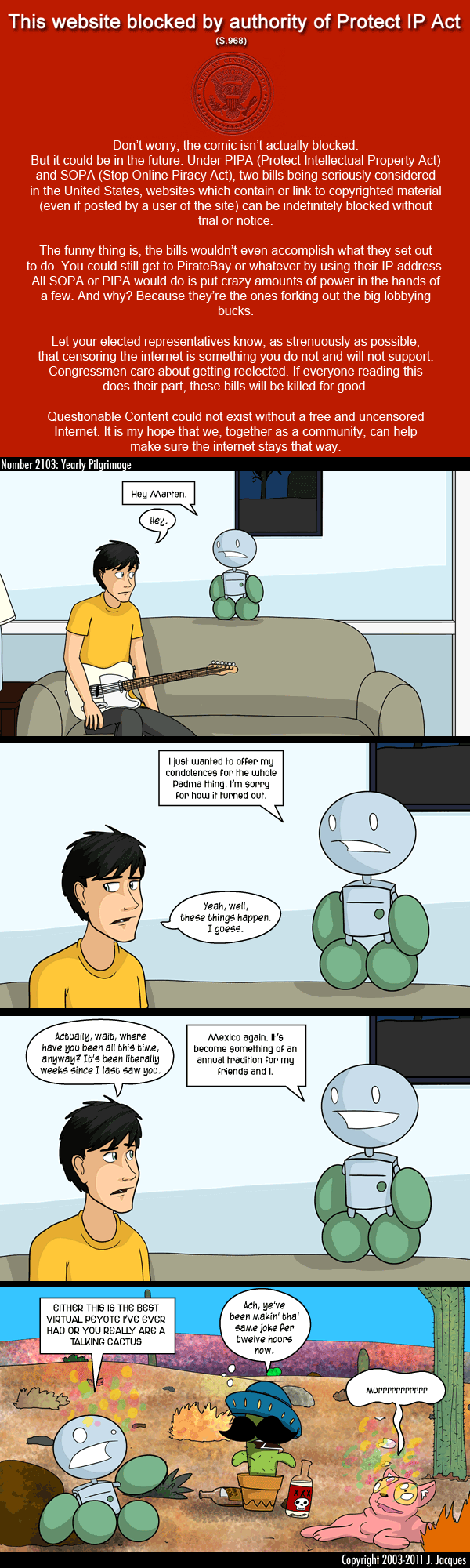
This Wednesday, Wikipedia and a bunch of other websites blacked out their content in protest to SOPA, a bill in the US Congress that would break the internet while not actually being effective at fighting piracy.

There is a version of this legislation that is immediately relevant to Europeans. It's called ACTA, and it's an international treaty that needs to be ratified by the Europarliament and individual EU member states before it goes into effect. The first step was approval by the European Commission, and that was done in a very underhanded and secretive way, to prevent the public from learning about it. Didn't work.

On the day of the SOPA blackout, I decided to be slightly more proactive, and do a little personal test of democracy. I went on Facebook and looked for the accounts of Estonia's Members of the European Parliament. Four of the six had accounts.* I sent a private message to three of them and posted on the wall of the fourth. (Facebook will only let you post on the wall of someone who already confirmed you as a friend, but you can message anyone directly. I happened to be Facebook-friends with Indrek Tarand already.) My question was simple: how do you intend to vote on ACTA?

That was two days ago, and impressively, two people have replied already. Ivari Padar said that he was not part of the committee that dealt directly with ACTA, but referred me to his parliamentary faction's position paper on it. It's a boring political answer and the paper doesn't actually say whether the Socialists & Democrats faction is for or against the treaty, but at least they're asking questions - and Padar scores points for promptly responding to a voter's inquiry.

The other response was from Tarand, who pointed me to his website. He'd published an opinion on ACTA as long ago as 2010, and while this is also a political text, it does make clear that Tarand's attitude to ACTA in its current form is negative. Hopefully he will vote against it if and when it comes up in the Europarliament's agenda.

Contact your MEPs and make sure the rest of them do as well.


---
*Tunne Kelam does have an account, actually, but I didn't find it at first - and it looks inactive (probably registered for him by a staffer to prevent squatting). Vilja Savisaar-Toomast has not replied yet, and neither has Kristiina Ojuland. Siiri Oviir does not have a personal account.

---
PS: This is the 600th post on antyx.net. Awesome.

Thursday, December 01, 2011

Dokumenteerija

Here's a video of a lecture I gave to first-year IT students at the University of Tartu, on the job of a technical writer. It's in Estonian, and it's short; one of a technical writer's core virtues is to talk as little as possible while still getting your point across.

Thursday, March 03, 2011

Kyoto and Estonia's Electric Cars

The most disappointing thing in recent years, in Estonian politics and life, is that we seem to have lost our edge; our willingness to go for awesome projects that might be very improbable and would not work anywhere else, but end up working really well here. The Tiger Leap program, the free wifi, the e-voting... How long has it been since there was a truly inspirational national project? The ultra-broadband buildout is the closest thing in the last few years, but that's not as obvious or immediate.

Now, it seems there is one. 

For years, Estonia has been supplementing its budget income by selling emission quotas under the EU and Kyoto Protocol regulations. Like fishing rights, this is a non-obvious but fairly serious revenue stream. The quotas are apparently assigned on a comparison basis, with 1990 as the baseline. In 1990, Estonia was still part of the Soviet Union, and all that Soviet industry was busy belching out pollution; most of it was not viable in a free-market economy and went bankrupt, so we are actually allowed to pollute a lot more than we do. The difference can be sold to countries which pollute more than they are allowed to, for cash... or other benefits.

Under the Kyoto Protocol, Estonia's initial assigned quota was around 196 million AAU per year; this is the emission level that was recorded for 1990. (One AAU is equal to one metric ton of carbon dioxide, although it's actually a mathematical calculation with conversion factors for other types of greenhouse gases - CO2 is not the only thing that industries emit.) In the period between 2007 and 2012, Estonia was subject to the general EU commitment to reduce that emission level by 8%, so it could claim no more than 180 million AAU per year. If companies in Estonia emit less CO2 than that, the leftover amounts can be traded with companies in other countries, and added to that country's allocation.

This commitment period is ending next year, and Estonia apparently has AAUs to spare, because instead of just selling them for cash, it will hand over 10 million AAU to Japan's Mitsubishi Corporation. In return, Mitsubishi will establish an electric car infrastructure in Estonia. The country's cities and major motorways will be covered by a network of 250 charging stations, and the state will receive 507 Mitsubishi i-MIEV electric cars, which will be used by social workers.

Besides that, the sale of additional AAUs will be used to finance a subsidy for an additional 500 or so vehicles for private buyers. Those cars will not be free, but they will be a lot cheaper than market price, and buyers won't have to stick to the Mitsubishis - any electric car certified for use in the EU will be eligible.

To receive the subsidy, the buyers will have to commit to purchasing sustainable energy certificates. This is a way of ensuring that the electric cars are powered by green electricity. The cars themselves can be charged from any station in the country-wide network, or indeed any power socket; the certificate is a way of ensuring that for each fossil-fueled kilowatt-hour that the electric car takes out of the grid, a green-fueled kilowatt-hour is put back into the grid.

Buyers of non-subsidized electric cars will, of course, be allowed to use the country-wide charging infrastructure, and will not be forced to purchase the green-energy certificates. Meanwhile, the subsidized electric cars will effectively consume no fossil fuels at all - apart, of course, from the energy used to build the cars in the first place. It's also worth remembering that all of this is financed by allowing a Japanese corporation to spew out greenhouse gases from its own factories.

But it's still an amazingly elegant and forward-thinking deal, one which will make Estonia one of the world's leading countries in electric-vehicle infrastructure. And the availability of charging stations is the real key to making electric cars viable.

Thursday, August 19, 2010

WTF... N9 FTW?

Holy shit, Nokia has suddenly come up with something truly desirable.

Last time I really, really wanted a Nokia was when they released the Booklet 3G, and I kinda knew the HP Mini 5000-series were better overall. I'd almost given up on Nokia, with their dark period of extending S60 far past the limits of its usefulness. And yet it only takes one really good-looking handset to make me start thinking about the company again. Once you do start thinking about it though, you might realize that Nokia actually has some quite important things going for it.

Nokia's utter irrelevance at the high end of the marketplace in the last year is essentially attributable to its one-time decision to switch its focus and decide to be a "services company", not just a hardware vendor. Like so many bad decisions, it was justifiable at the time: Nokia was at the top of its game, owned the market, and could not see room for organic growth.

The external factor that decimated Nokia is the rise of touchscreen devices. The company's own products aren't necessarily bad at what they were designed to do - S40 is still the best featurephone platform out there, and S60 worked well enough on midrange keyboard-based devices. Hell, they even managed to release a genuine cult device on S60, the E71/E72.

However, Nokia kept S60 around for far too long. It ran slow already on my N85, and was positively ghastly when extended to touchscreen devices as S60 5th Edition. Nokia did itself no favours by launching its touchscreen lineup with resistive displays, but even the capacitive X6 was confusing and uninspiring with 5th Edition. And while Nokia's E-series hardware was decent (if sluggish) - the E51, E71 and E75 looked good and seemed to be built well - the flagship N-series models were made from cheap materials and had pretty terrible reliability.

Nokia's presumed focus on services was not aligned with the market direction: Ovi, their service platform, paid a lot more attention to serving music and video content than empowering third-party developers. Symbian in general and S60 in particular did have a lot of devs, but Nokia's waffling and a lack of convincing halo devices wasted all that goodwill. Still, the lack of a vibrant app store is not the biggest problem: in terms of actual functionality, there is nothing that my Android phone can do that an upmarket Nokia cannot. (Is there a Kindle app for S60?)

The irony is that even at S60's worst, the functionality of Nokia devices was not just compelling, but overwhelming. I sold my factory-unlocked iPhone 3G and spent another eight and half months keeping my N85 alive because there were things I did every day which the device with the industry's best hardware could not do for love or money. The Finnish phone was slow, its keypad kept cracking and coming unglued, and the headphone jack fell apart every few months. But by God, it ran JoikuSpot, it ran Fring in the background, and Nokia's native podcast software was the best that I have seen anywhere, before or since.

Half way through its downturn, Nokia announced Symbian^3, a new release that promised to get rid of S60's sluggishness and frustrating limitations (like the preposterously bad networking stack, which could not use ambient WiFi without user prompts - at a time before 3G data became inconsequentially cheap in Estonia). The problem with S^3 was that it stuck to the S60 UI. While I can understand the reasoning - Nokia wanted to leverage the enormous installed base and give users a familiar visual experience - S60 5th Edition was just never good, even when it had the hardware to make it responsive.

The N9 leak suggests that Nokia may finally have a solution. This is an entirely new operating system, a wholesale break with Symbian. It's called Meego, and is the merger of Nokia's own Maemo (a Linux derivative that it tested on its Internet tablets and the N800 phone) and Moblin, a barebones OS that was developed by Intel for quick-booting low-power PCs.

Meego's potential advantage over the Apple and Google operating systems is that it has both true multitasking (which Android offers but iOS doesn't, even in its latest version), and that it gives developers access to the phone's hardware at a far more extensive level. It is also designed from the ground up with modern hardware in mind. The UI is still the part that worries me the most, but the video in Engadget's N9 post makes me cautiously optimistic: it's certainly not as bad as S60's widget jumble.

So with the N9, Nokia has beautiful hardware and potentially very good software. It also has some functionality that makes it stand out to geeks like me. To make Nokia and Meego truly relevant again, it needs something more. It needs a killer app. And thanks to Nokia's one unassailable success during its "services company" phase, it has one: Offline navigation. This is the ability to download maps of a city/country/continent onto your phone, and then use the device just like a standalone GPS unit. Nokia's adversaries cannot compete on this front.


  • The iPhone has a Tomtom app, but it's expensive and almost requires a special hardware accessory, to boost the device's mediocre GPS receiver.

  • Android is only just starting to get support from mainstream GPS vendors: there's an app from Navigon, which I've tested. It's good, but the full version is expensive, and only has maps for Europe.

  • Google Maps, which is available on both devices and covers the entire world, does not include navigation functionality. It also doesn't store maps locally - it only downloads data for the bits you're looking at right now, and deletes everything when you exit the application. You have to re-download the maps every time you use the app.

  • The navigation-enabled version of Google Maps is Android-only, officially exclusive to the US and one or two other countries.

  • You can get a cracked version of Google Navigation that works anywhere, and a version of Google Maps that stores the map data locally once you've looked it up once. Google makes no effort to block these, because it's not maintaining exclusivity out of its own free will.

  • Map data is difficult to gather, so it's extremely expensive, and there are only two companies in the world that have access to a comprehensive global catalog: Navteq and Teleatlas. Google just licenses the data from these companies. So do all the other makers of personal navigation devices. Google would love to offer its Navigation app on every Android phone in the world, but the licensing terms for the data prevent them from doing it.

  • Even if you have the cracked version of Google Navigation and Google Maps, it still requires a WiFi or 3G data connection at least often, if not constantly. This is fine if you're in the US, where your operator covers the entire country and unless you wander into Canada or Mexico, your 3G data costs the same as if you were at home. In Europe, phone contracts are limited to your own country. If I travel into Latvia or Finland, I'm using 3G data as a roaming service, a guest on another operator's network, and that is just expensive as hell, even with recent EU caps on roaming charges. The further I travel away from home - and the more I feel the need for satellite navigation - the more prohibitively expensive it gets.


Here's the clever bit. Nokia owns Navteq. It has free, unlimited access to global map data. (Navteq is a profitable enterprise on its own, Nokia isn't subsidizing its operations out of its own profits.) Now, Nokia has had decent offline navigation since the early days of S60, but in the last year or so, it's decided to stop charging for it. All newer S60 devices, and all future high-end Nokias, have free, comprehensive offline navigation. No need to hunt for WiFi or pay for data roaming, no need to wait for the phone to download maps on the fly. (You download them at home, before you start your trip, using your fast broadband connection - then they just sit in the phone's memory, whole countries at a time.)

The cost of TomTom for iPhone (which only covers a few countries per purchase), or the cost of Navigon for Android (which doesn't even cover Asia or the US right now regardless of how much you pay), is comparable to the cost of the entire smartphone, when you buy it with a long-term contract and your operator subsidizes it. It is only slightly less than the cost of a standalone GPS navigation unit (which you need to keep charged separately, carry around, worry about leaving in the car, and which is difficult - and expensive - to update with data about new roads or different countries).

All Nokia needs to become a massive force in the high-end phone market is a set of hardware and software that doesn't completely suck. Its unique and overwhelming advantage in the navigation space will do the rest.

---
And if Nokia's PR department is reading this, I would love an N9 review unit!

Monday, July 19, 2010

Fractions and domains

One and a half big story in Estonia these days, of some interest, at least in a "what are these people thinking?" sense.

First, we finally got the final word on Euro accession, and the tinfoil hat brigade which refused to believe that the exchange rate will stick (it did, 15.6466 - no change since 1992) are now screaming about the inevitable price increase due to everyone rounding the prices up to the nearest full Euro amount.

The first relevant point is one that I've actually made in my standup comedy routine (to very few laughs): this may be true, but it's a stupid argument. Over the last, what, five years, Estonia's been through a boom, a bust, tax hikes, oil at $150 a barrel, and twenty-percent unemployment. Worrying to this degree about the rounding is about as useful as worrying about cancer when you live in Haiti. You're not wrong, but you've got far more immediate problems to worry about.

The second point is that this is as good an example of a self-fulfilling prophecy as you can have. Shops and restaurants are not stupid, at least not the successful ones. Prices will rise to the level that people are willing to pay for them. (I've talked about this as far back as 2007; probably earlier still, just can't find it right now.) Competition between big supermarkets may keep margins on food low (but won't, necessarily, see this Ekspress article for insight). Even then, any opportunity to raise prices will be seized upon. The only barrier to this is the consumer's inability or unwillingness to pay the asking price. Enough downward pressure can result in prices being lowered - that's how we ended up with actual deflation in 2009 - but if the consumer is expecting the shops to raise prices, and is prepared for this mentally, then naturally the shops will do just that. They'd be fools not to. Especially in a case like this, when the blame and the bad will is not actually directed at the shops, but at the government.

Don't like that Vapiano raised prices from 60 to 62 kroons? Don't eat there. Don't like that the loaf of Rimi bread which cost 15 kroons yesterday is 15.65 now? I'm quite sure Säästumarket would greatly appreciate your patronage. (Wait, Säästumarket is owned by the same company as Rimi. Try Konsum or Prisma, they're at least roughly based on Estonian capital.)

Now, the reason why so many Estonians are so convinced of the inevitable rounding-up is because they are entirely unused to the value of currency fractions. The smallest Estonian bill is 2 EEK, and that one actually sees a lot of use. Fractal prices exist, but you either pay by card and don't notice, or you get a small number of sent coins. Which you either recycle quickly without ending up with a big pile of metal, or you just dump into a jar at home. (For an interesting analogy look at Sweden, which has a small-value currency and prices roughly numerically the same as ours, but the smallest coin they have is half a kronor. Even that one you'll almost never see if you're a tourist.)

Estonians don't expect europennies to be worthwhile, but they are, and the Eurozone gets away with fractal prices quite nicely. Just today I paid 5.90 EUR to get from downtown Helsinki to the airport. Hell, look at Latvians: their currency is denominated at about a Euro and a half (originally priced at parity to GBP, but pegged to the Euro), and the smallest paper bill they have is 5 Ls - about 130 EEK. You talk to Latvians about rounding all the prices up to the nearest Lat and see how fast you can run.

OK, second story: Estonia has recently liberated what is known as a ccTLD - Country Code Top Level Domain. The right to have your website named stuff.ee, essentially. Previously only legal entities, companies, could get a .ee address, for free, and only one. Individuals could get a .pri.ee address, which was supposed to be the equivalent of .co.uk, but never caught on. Now .ee domains are available to anyone (I just registered antyx.ee and antyx.eu, so don't even think about it, you bastards), but at a price. 20 Euro or so per year. This has gotten a lot of people so riled up that they actually started a petition.

Now, to be fair, a lot of their gripes are with the way the domain reform was conducted. Apparently there was a lot of incompetence and impropriety involved, and I have no cause to doubt them on this part. What does surprise me is the amount of piss and vinegar being spewed about, on the count of the domain's price.

Yes, 20 Euro per year is higher than any other ccTLD in Europe, and the price has not been meaningfully justified. But this is still a trivial sum for any project being pursued by anyone, even an individual, with any vigor. I suspect antyx.net has gotten me more free pints than 20 Euros' worth per year, and I don't even own antyx.com!
Now excuse me while I go drink red wine and stare at the Bosphorus.

Monday, April 12, 2010

Why Android

Went to the photo store today, to make a batch of flyers for our standup show. Eric whipped up a high-res JPEG with four banners stacked, so we could print them out for cheap on photo paper, cut them up into quarters, and leave at pubs, etc.

The Photopoint at Tartu Kaubamaja is for some reason not allowed to just pull off an image file from the Web. So, I take out my HTC Legend, go into AppFTP, get onto my file server, pull down the six-meg image onto the microSD card, pull it out, give it to the attendant and have them copy the file to their machine.

Is there an app for that, motherfucker?

Monday, May 18, 2009

The Thousand Dollar Car Theory Still Holds


The Mazda RX-8 was launched in the early 00s, and at the time, I really thought it was close to the perfect car. It was a rear-wheel drive sports coupe, looked really good, and was relatively practical; in fact there was an ad campaign for it saying that if you tried hard, you could actually justify it to your spouse as a family car.

I liked it so much at the time that I made myself a promise. Obviously I couldn't even come close to affording the RX-8, but others bought them, and of course new cars depreciate rapidly - especially expensive sportscars from non-prestigious brands. I told myself that when I was 25 - which seemed like a long way away - I would buy one. Even if it was used. Even if I would have to pay it off until I was 30.

I turned 25 a little less than two weeks ago.

Unfortunately, the RX-8 has a serious flaw. Its engine is unusual, a completely different engineering solution to regular piston motors. It's called a rotary engine, or a Wankel after the German who invented it. I won't go into detail, but basically it is smaller and lighter than a piston engine, but produces more power. The downside is that because of some inherent problems with Wankel's design, it's not terribly reliable. Reports from RX-8 owners suggest that the engine tends to break down catastrophically after 100,000km, even with careful maintenance. If the RX-8 had come with a regular engine, such as Mazda's 2.3-liter turbo from the MPS line of cars, it would be perfect; but it doesn't. An RX-8 that has done around 30,000km costs about twelve thousand Euro in Estonia today; not completely outside the realms of my budget, but not the sort of money I'd feel comfortable spending on an inherently unreliable machine, despite the fact that I don't drive that much. (My current car has done around 25,000km in two and a half years, and the bulk of that has been on the Tallinn-Tartu freeway.)

However, I would still like to keep the promise to myself. And it appears that the Estonian Volkswagen dealer got an unusually large shipment of the new Sciroccos. Now, I like the Scirocco: it looks good, and it's based on the VW Golf GTI, which is considered one of the most fun cars this side of something fundamentally impractical. (People who write for car magazines have repeatedly stated that on real-world roads, a Golf GTI will certainly be able to keep up with a Ferrari.) In Estonia, today, VW will sell you a Scirocco with all the equipment you need for less than 20,000 Euro. For a car in this class, that's bloody cheap, and VWs keep their value quite well as used cars, and hey, my mortgage interest rate dropped like a brick in April, didn't it?


I was in Tallinn this Friday on other business anyway, so I went to the main VW dealership and test-drove the Scirocco. The one they had was the top-end model, with the turbocharged engine and DSG gearbox - the best automatic gearbox in the world right now, by general consensus of people who know about these things.

My first reaction was that I was right to aim for the cheapest model, with the less powerful 1.4 twin-charged engine (which is still powerful enough to force me to contribute to Estonia's ailing budget), and manual gearbox. I've had the argument with Mingus, who dismisses the common argument of manuals giving better control, because with an automatic you always have both hands on the steering wheel - and that's safer. Honestly, I can't refute it, and the DSG was really awesome. I simply enjoy driving a stick shift more.

But honestly, even while I drove the Scirocco down the back roads of Tabasalu, I couldn't feel it. I wasn't experiencing that wonder, that sense of do want that I would need to justify the purchase. I spent over eight thousand kroons on my little aluminium HP laptop, which was more than the competition, and I didn't strictly need it - but the satisfaction from owning something genuinely awesome was worth it.

It's the same thing, every time I drive a new car. It's great, sure, but it's not mind-boggling; it's not an order of magnitude better than whatever I am driving myself at the time. I had the same experience with a Suzuki Grand Vitara, back when I had a 1988 Honda Accord; the Suzuki was quiet and comfortable, but dog-slow in comparison. Modern cars are just too heavy to take advantage of the power, and neither do they have the ability to filter out the imperfections of our roads - certainly they don't provide the difference to match the price increase compared to a ten-year-old car. Yes, a new one will be more reliable - but, if you choose your ride carefully, a used one will not be more expensive to run than the maintenance costs of something that still has to be serviced at the dealership to keep the warranty.

It's odd that, for such a gearhead, I am having such trouble getting properly excited about something as nice as the new Scirocco.

----
PS. The guy I talked to at the dealership was a real pleasure. Friendly, active and competent. I feel like an asshole for deciding against the Scirocco, so if you're looking for a new car these days and have been disappointed with the customer service levels at most dealerships, go to Saksa Auto Pluss in Tartu (corner of Aardla and Ringtee) and ask for Allan Ainson. And I think there are some really good discounts on most VW models these days.

Wednesday, April 08, 2009

I hereby suggest that the below extract from this XKCD strip be adopted as the autoironic mark of technical writers everywhere.

Tuesday, April 07, 2009

Do Want, Assorted

It's spring and the gadgets are coming. HP has finally released the HD-screen version of the 2140, and I want it. I've got a 2133 right now, as long-time readers might remember; it's by far the best notebook on the market in terms of build quality, and has an excellent keyboard that I have typed very long texts on. The trouble with the 2133 is its dog-slow CPU. The 2140 has an Atom CPU, which means it's faster and lasts longer on the same battery. It also has a larger screen, in the same outer casing. Up until now the screen they offered was a meager 1024x576, but the new one is 1366x768 (same pixel count as the 2133, but 10.1" instead of 8.9").

I just tried the configurator on HP's website and a 2140 with the HD screen, six-cell battery, 2gb RAM and a 7200rpm hard drive came out to $684 (sans Windows). That's less than I paid for my 2133 a year ago, and it's the top hardware they have. The 2140 is even available in Estonia; let's hope they get the HD model in stock soon.

Meanwhile, I keep drooling over cameras. The Sigma SP2 is what compact cameras should have become ages ago: a really good sensor in a small body. It has no optical zoom, but it shoots in RAW mode, so at 14mp you can just crop to taste. Still, it costs $649, and ultimately I don't need all those megapixels; what compact cameras really need is a very, very good 2mp sensor. (How many photos have you printed in poster-size, in your life?)

This should appear in Europe soonish as the Canon 500D. It's the 50D's sensor in a 450D body. Desirable for a second, but ultimately I will probably have to wait for Micro Four Thirds cameras to drop in price. I need a tilt-screen, and the entire SLR concept is useless for digital cameras; its point was to show the same image in the viewfinder that would be captured on film, but now you can just export the signal from the sensor to the LCD, before it gets captured in full detail. Micro Four Thirds keeps the high-quality sensor and swapping optics of DSLRs, without the extraneous bullshit, and in a smaller package. Since there are companies making adapters that let you fit standard Nikon/Canon lenses to MFC bodies, that's definitely the way to go. Until then, there are things my Canon SX10 can do that I still haven't learned to use properly.

By the way: the keyboard on my N85 broke and became unglued. Apparently it's a common problem, a design flaw. I like the hardware on the N85, but the build quality is atrocious compared to the 6500C I had before, and the phone itself is a lot more expensive. So while I'm waiting for Tele2 and Nokia's warranty to get back to me, I've ordered an Ericsson T39 off eBay. 344 EEK including shipping, and two batteries. It's old, and it's eminently cool.

Monday, February 23, 2009

Tele2 starts to get it right (finally)

I've bitched about Tele2 before, specifically their SMS spamming ways, but the truth is that I've been a customer of theirs for over ten years now - and didn't leave even when I wasn't locked into a contract. They're cheaper than the other two physical networks, and while the coverage is a bit worse than EMT, it's never bothered me too much. But they could certainly stand to increase the uptake speed on innovation.

One of the mobile-related subjects I've brought up is the viability of unlimited data plans on 3.5G. While people from the carriers have assured me that the Estonian networks will not be running out of capacity any time soon, they have certainly been taking their sweet bloody time with it, so there must be some concern. Currently, the top end of the data plans give you 3GB of traffic per month (though, again, the man from Elisa has assured me that the limit is currently not being enforced) at a fee of about 20 Euro - which is acceptable if this is your primary Internet connection, but far less so if it's something you use every now and again. The data plan I got for my N85 is 99 EEK (7 Euro) for half a gig of traffic, which is on the upper edge of what I am prepared to spend on what is essentially a backup connection.

EMT has had campaigns where you could use data on your account and it was capped at 9 EEK per day - although I believe that wasn't permanent, just a temporary promotion. My latest bit of Tele2 paper spam tells me that their prepaid cards are now capped at 15 EEK per day - the same price as a 24-hour ticket, which you normally need to specifically purchase with an SMS, but which does give you unlimited data at HSDPA speeds. They really need to extend that to contract customers, and make it a permanent feature; that would be an awesome advantage for them (until EMT and Elisa do the same).

As it is, what I really need right now is a slim PCMCIA data card - which EMT sells, but Tele2 doesn't - and a prepaid Tele2 SIM loaded up with enough cash for me to not have to think about data usage from my laptop.

I also need data roaming to stop being so preposterously expensive, but then that's not going to happen any time soon, is it.

Friday, February 06, 2009

Skype is for chat

There's a CNN show on, and the host is asking people to leave feedback, via Skype.

I keep telling people that Skype at this point is mostly useful as a chat protocol, not a voice communication service.

(CNN also read out twitter messages. Sigh.)

Sunday, December 28, 2008

What the fuck is Edicy?

Brace yourselves: this is going to be another tech rant.

Edicy is one of a number of startups funded by Ambient Sound Investments, which in turn is the corporate invocation of the enormous pile of money received by the four Estonians who were in on the ground floor of Skype. I only became aware of it because of a fellow Esto-blogger who got hired to work for them.

What Edicy does, ostensibly, is give you a nice, simple web page editor. It's all done inside the browser, in a cute Web 2.0 sort of way. You know - widgets. Awesome! I thought. It was about time for me to add a page to antyx.net advertising my freelance translation and documentation services, and with Edicy, I could use a very clean and well-color-coded template, just typing in my own text. It even had a rudimentary blog engine, though obviously I didn't need that. I muddled around with the page creator for a bit, but there were bugs in the interface, and I couldn't see what I could do with the page, except leave it there as a numbered placeholder. And, as usual, I was wondering how these folks intended to actually make money off the product.

It is said that history repeats itself thrice: once as a tragedy, again as a comedy, and furthermore for the dumbasses who didn't get the point yet. Time has passed from that early beta stage, and now Edicy is a full-on product. And the product it is, is goddamn Geocities.


Remember Geocities? Cast your mind's eye a decade back, when Al Gore had just invented the Internet, and we were all eager to grab a part of that action. The premier way to leave a mark was to have a Geocities homepage, where you could use a pink swirl image as a repeating background, a MIDI for background music, and post pictures of yourself and your goddamn motherfucking cat.

Geocities was the tragedy. MySpace was the comedy.

(Full disclosure: I might have gotten a Geocities page, but I never really used it. Even back then, I was 1337 enough to code my homepage in Notepad.)

Edicy is Act Three. In their current, presumably finished state, they will let you make a mostly-text page with some nifty browser-based tools. Except you can't do much with it when you're done. What I expected is some sort of export facility, where they would give you an index.html and a folder with all the images and CSS files, with relative paths in the code, so you can simply upload it to wherever you want. Ideally they'd have some sort of generic hosting integration, where you give them your FTP details and they do all the hard work - kind of like I use the Blogger engine to automatically publish static HTML pages to the antyx.net webhost. No setup or knowledge of PHP and chmod required.

Edicy won't let you do any of that. Instead, you have three options. You can publish your page at prefix.edicypages.com - just as the easiest way to use Blogger is to have a prefix.blogspot.com. That's fine for blogs, but personal homepages died out mercifully with the first dotcom crash. The online presence of a regular person these days is on facebook, which doesn't offer an easy-to-remember URL, but does offer a lot of other vastly superior interaction tools (including a perfectly functional search by name, gender and general vicinity). If you have your own website, it will probably be for some kind of business promotion purposes, and at that point you better fucking have your own domain name. It's 2009, you bastard. Godaddy will get you a domain for seven bucks, and webspace is cheaper than toilet paper.

This isn't even Googlepages, which at least has some air of fanboyism about it. I don't approve of Google worship, but at least I understand the mechanism of trying to attach oneself to the aura. But this is Edicypages, and what the fuck is Edicy?

Of course, you don't have to stick to edicypages, just like you don't have to stick to blogspot. Except here's the big difference: Blogger will let you do things with your blog for free. If I wasn't already paying for hosting, I could point the antyx.net domain to Blogger's servers, and none of you would notice a difference, or care. But I have this overarching feeling that the way a blog engine is supposed to work is to generate static HTML that gets published on a webserver that I control, so I do that. It means I can't use some of the newest Blogger widgets, but it's a free service and the important functionality is still there, so I don't especially give a shit.

But Edicy is not like Blogger; it's not one of those Web 2.0, advertising-supported ideas that I loathe so much and criticize for not having a discernible source of revenue. Oh no. Just as Skype charges its users to call regular phones, Edicy will offer its pageholders a premium commercial service.

Enter Edicy Pro. For a small fee, they will host your text-and-images homepage and make it accessable from any domain (that you have to buy separately, of course). They will even let you download the page! And give you priority support!

And the cost? Depending on the length of your commitment, 4-5 Euro per month.

MOTHERFUCKER.

My own web host, the unassailably awesome Tantum.ee, will give you a gig of web space and 25 gigs of traffic per month for eight euro a year. By broadband standards, a gig doesn't seem like a lot, but let me put this into perspective: I only changed up from their cheapest package when the site first got slashdotted and I ran into the traffic cap, which back then was something like 3gb per month. And yes, their hosting package does include a site builder.

Also, I checked: the output of the Edicy page builder is clean HTML. You might need to grab their CSS files as well, but otherwise, open your prefix.edicypages.com page, View Source and save to Notepad.

I mean no offense to Sehr, and I certainly appreciate that they have thought about revenue sources, but OMFG, this is preposterous. Makes me wonder about the whole ASI incubator: the other startup of theirs that I am aware of is a self-customizing RSS feed.

AddThis

| More