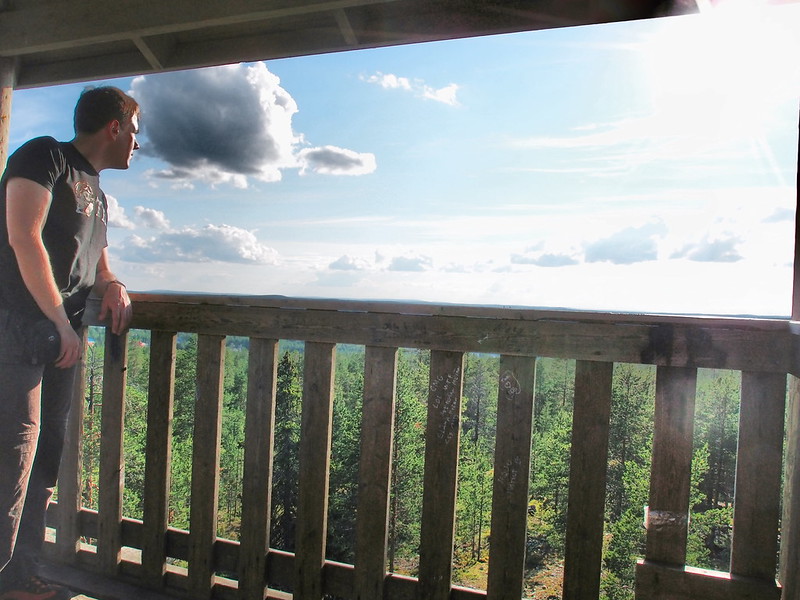
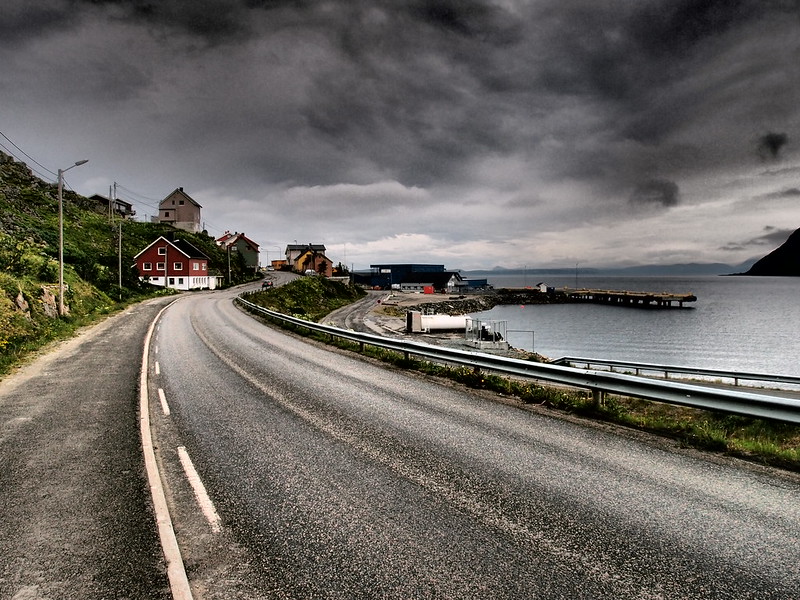
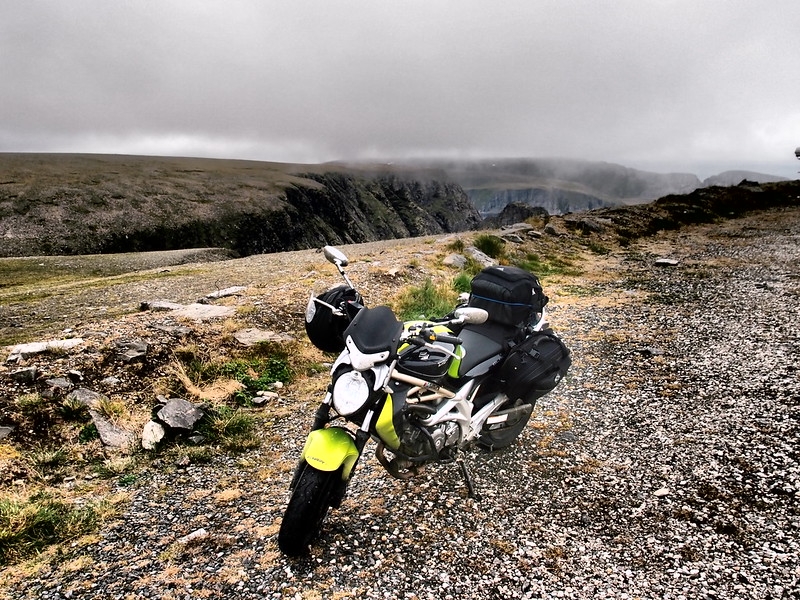
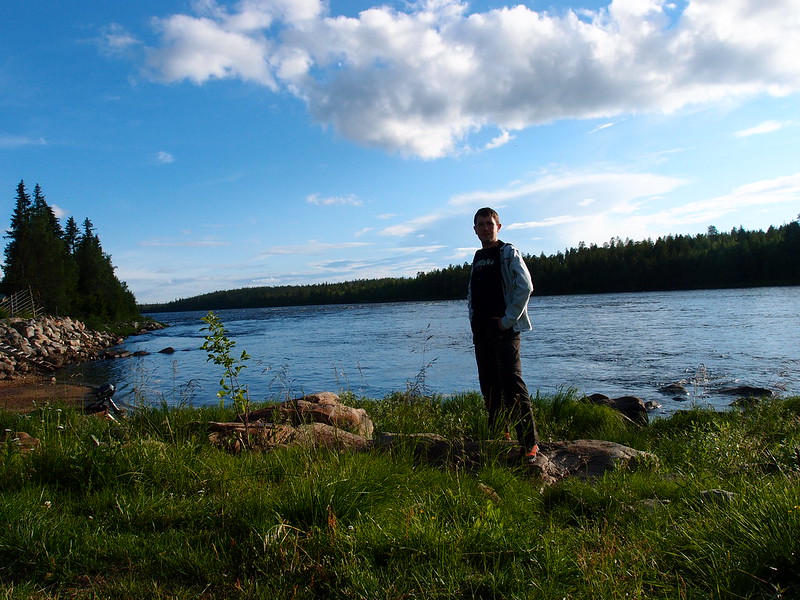
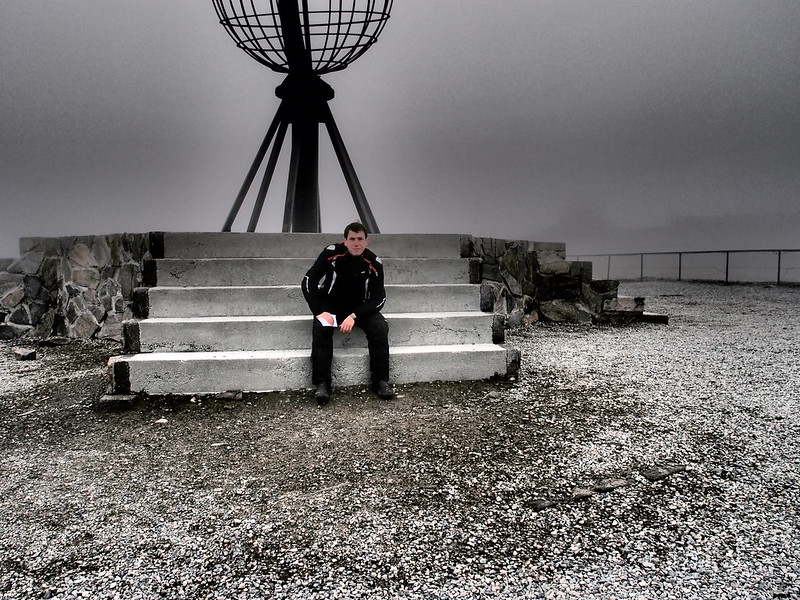
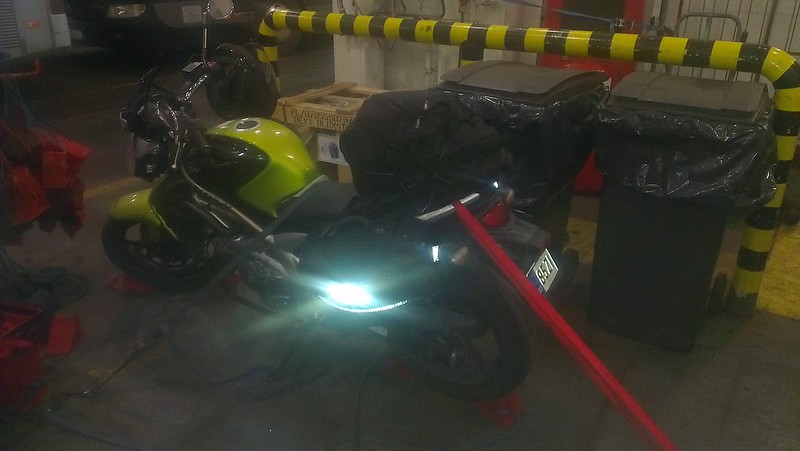
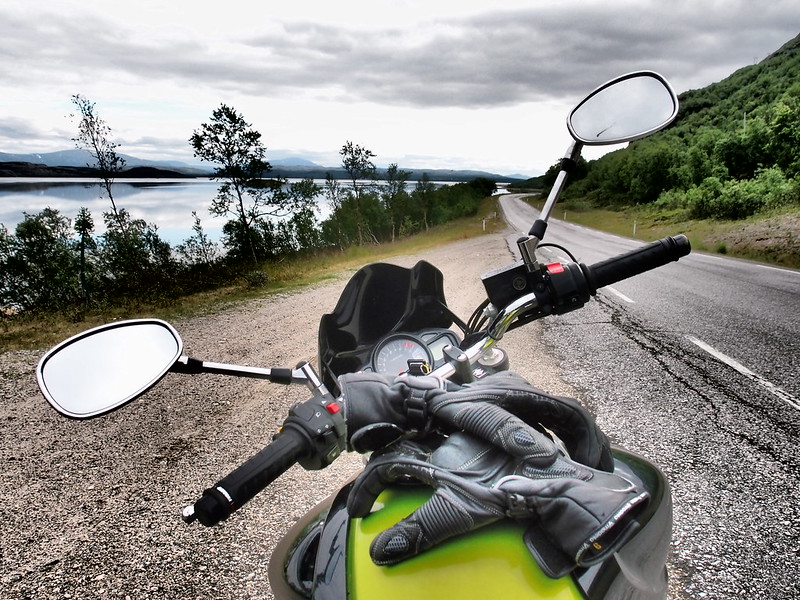
Think of this as one of those "For Dummies" guide, written by a dummy. This is my first riding season, I only got my license last September and bought the motorcycle in December. This July, I had vacation time to spare and no desire to go lie on a beach, so I got an early start on every self-respecting rider's mandatory pilgrimage to the northernmost point reachable by paved road: Nordkapp.
My journey took me a week and some 4000km, and I took two different roads through Finland: up via the more populated western coast and Swedish border, and back down via the mostly empty northeast. Masses of bikers make the trip up to Nordkapp every summer, but in preparing for my trip, I found that there aren't very many practical reports and descriptions. Those I did find were quite helpful, so I hope others will find use out of what I can now contribute. If I miss a question, feel free to ask it and I'll answer if I can.
Preparation
You don't need a touring or adventure bike to make this trip. I rode a naked bike with a stock saddle (known for being not particularly comfortable), and although it was inconvenient on the freeways, I massively enjoyed it on the mountain roads of Norway. Whatever kind of bike you have, you can and should take it to Nordkapp. (If you made the trip on a seatless trial bike, or a 50cc scooter, I salute you and want to buy you a beer.)
That said, I suggest you start out by doing a daytrip of a few hundred kilometers around your home, and think of whether you can sustain that kind of riding for a whole week. Remember that even on a long riding day, you will be stopping for gas a lot more often than you would with a car. Between that and stops for lunch, taking photos, etc., you can give your ass enough of a rest.
With very little long-distance riding experience, I figured out that the
maximum comfortable daily riding distance is about 500km. I did 660km on my first day, and was absolutely exhausted - it's definitely not something I would have liked to do every day. Later on, I had a few short 350km days, which allowed me to check out late, and get to the next town early enough to explore.
Pay attention to your bike's wind protection. Even a small windscreen will help a lot if you're normally riding a stripped streetfighter. If you've got a chopper without a windscreen, dress extra warm.
Equipment
You need an appropriate riding suit, and warm clothes. Nordkapp is literally the northernmost point reachable by paved road, and once you pass the Arctic Circle, you still have two days of riding due north to get there. Tight leathers won't help. You need a good
textile suit, windproof and waterproof. (Some people use rain overalls, but those are inconvenient and more or less single-use.) Additional thermal layers help. I had a full matching suit with a thermal lining for the jacket and a waterproof lining for the pants, and I still had to buy long underwear and a fleece once I got north of the Bay of Bothnia. The rule of thumb is: wear what you would if you were in the ambient temperature, then add your riding gear on top of that, and make sure you're waterproof.
It will rain.
You'll probably wear whatever helmet you already have, but if you have a choice, I'd recommend a full-face enclosed one. The ones with flip-up jaws are nifty, but you rarely actually need that function; and a full-face helmet will be both lighter and quieter at high speed. A built-in retractable sun visor can be very helpful.
The one thing you probably don't need on this trip is a dedicated GPS device. Regular navigators are not rugged enough to be used on a bike, where they are exposed to rain and wind and road grime. Motorcycle navigators are unreasonably expensive. Both are clunky to mount on your tank or steering handles, and distract you from the road. Most of the road to Nordkapp is well-signposted; for those very rare cases where you need to get your bearings, you can probably just use the GPS in your phone. (Make sure to pre-load the maps for the countries where you're going. You don't need turn-by-turn guidance, but you do need an offline copy of the map.)
Luggage
This depends largely on your budget, preference, and type of bike. Lapland and Finnmark (the northernmost provinces of Finland and Norway respectively) have pretty good travel infrastructure, but these are still very sparsely inhabited places. You can't just bring your credit card, at least if you don't want to walk around in your riding gear and soaked T-shirt.
You don't need to bring a tent - I didn't - but a sleeping bag is a good idea. Other than that, have at least one pair of normal trousers, comfortable shoes, and a softshell or rain jacket in addition to what you wear on the bike. A fresh pair of socks and underwear for every day you're going to be on the road - these can be cheapo supermarket items that you throw away at the end of the day. Bring spare provisions. I had a couple of ramen cups and a bunch of cereal bars. Canned food is good, but heavy.

Don't encumber your bike too much (you want to have fun riding!), and make sure the luggage is secure and comfortable, and does not restrict your body movement. The one thing I would not recommend, on a sporty or naked bike at least, is a tank bag. You'll want to lean forward at some point, if only to reduce your wind resistance, and it's good to be able to get right onto the tank. There isn't anything inherently important about a tank bag - the roads are straightforward, you don't need a map, and shouldn't be taking your eyes off the road anyway. Between saddlebags and a rear bag/backpack, you should have enough space. Remember the ultimate maxim of travel packing: if you can't carry your luggage up the stairs yourself in one go, you've brought too much.
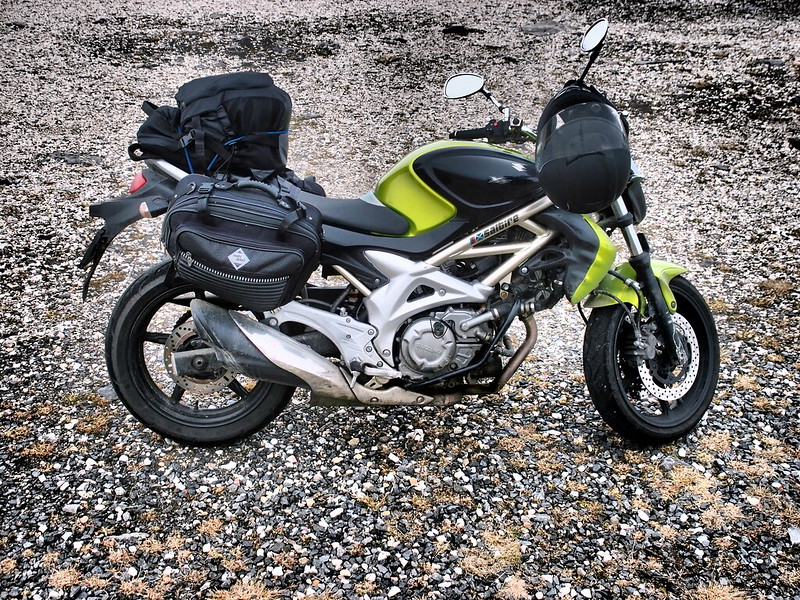
I had a set of soft saddlebags that I got for 40 euros, used, plus a largish backpack fixed on the pillion with elastic cargo straps. This isn't as good as a full set of hardcases on fixed racks, but it got the job done, and it was a hell of a lot cheaper. Look on eBay, and particularly on your local biker forums: you've got a good chance of picking up a cheap set of luggage from someone who just used up all their vacation time and won't be going on long trips again until next season.
Sanity
Riding for hours upon hours in a day, and staying in unfamiliar places, often campsites without any major population center or source of entertainment attached, can be lonely. The enforced isolation is certainly one part of the beauty of long-distance motorcycle trips - you're forced to clear your mind in order to ride safely - but at some point, it still gets boring. Music helps; audiobooks help more. A good audiobook or a set of podcasts will distract your mind without affecting your body movement.
There are two important things to remember here. One is battery life. Many touring/adventure bikes have 12V power outlets (like the cigarette lighter outlets in cars), and it's trivial to install an aftermarket one on any bike, under the seat for example; any electronics shop will have a cigarette-lighter-to-USB plug. The inconvenience with charging your audio player on the move is in handling the earphone cord. A helmet-mounted Bluetooth speaker system, or any other Bluetooth setup, solves that. (You can get a Bluetooth dongle with a standard 3.5mm output, pair that to your phone, and use whatever headphones you're used to.) The big problem is that any Bluetooth system introduces a new battery that can run down at an inconvenient time. Overall, I prefer to put the phone in my jacket and use wired earbuds. I have an external battery pack with USB output, which is too bulky to use on the move, but it's enough to juice up the phone while I've stopped for lunch. Remember that if you're traveling abroad, you probably don't want to pay data roaming charges; turn off the WiFi, Bluetooth, mobile data and background sync options, and even a fancy new smartphone like my HTC One X will last you a full day's riding.
The other important factor is your earphones. If you're not riding a tourer or adventure bike with great wind protection, you'll have a wind noise problem. Most earbuds are not loud enough. I don't have a full helmet-speaker system in my current gear, but I used a Cardo Scala Rider during my training, and it wasn't loud enough at highway speeds on a naked bike. My favourite behind-the-ear phones - Sennheiser PMX-60s - would not fit inside the helmet. What you need is canalphones, the type of foam-tipped compact earbuds that get screwed way down into your ear canals. The weapon of choice seems to be the Sennheiser CX-300, but I just used a pair of cheap Vivancos that I had lying around - they were adequate for spoken word content.
If you've got good experiences with audio setups, I'd love to hear about them!
The Road
Nordkapp is your destination, and while there are some magnificent roads on the final stretch, you have a few choices of how to get there. The best route I can think of is to get yourself to southern Norway and ride all the way up along the coast. From Central Europe, you can bypass Poland entirely by taking a ferry out of Rostock or Travemünde, or do the entire trip rubber-to-road by going through Denmark and over to Sweden via the Östersund tunnel. From southeast Europe, I'm told that Belarus actually has good roads and not very corrupt highway cops, but you'd need to get a visa.

If you're coming from further away, I really do suggest you try to avoid going through Poland if you can help it. This is based both on my own previous experience and on the opinion of everyone I've asked who's driven through Poland on the way to central Europe and back. The problem is that Poland has an incredibly high volume of transit traffic, including a lot of trucks, and the road network is quite patchy. There's a really nice autobahn in the middle, but it doesn't stretch to the German or Lithuanian borders, and you'll be breathing diesel fumes in heavy traffic for far too long. From the Polish-Lithuanian border and all the way up through the Baltics, the roads are decent, fuel is cheap, and you can bypass all the big-town traffic until you get to Tallinn.
If you're feeling adventurous enough, and can swing a visa, and are determined to avoid ferries, a detour to St. Petersburg can certainly be worthwhile. The Estonian-Russian border crossing at Narva may be permanently congested, but motorcycles get to skip the line. You may be tempted to take the Russian roads almost all the way north and cross into Norway at Kirkenes (I know at least one guy in St. Petersburg who intends to do just that); I wouldn't necessarily recommend it, but it's certainly going to be less boring than Finland.
Once you get to Finland, there are overnight car-carrying trains out of the big southern cities, and they will take bikes as well, although you don't get a discount on the fare. They're not very frequent, but if there's one that works with your schedule, you can have an easy overnight voyage that will get you up past the Arctic Circle. Depending on your circumstances, it might not even be that much more expensive than riding - but don't fool yourself, it is definitely cheating.
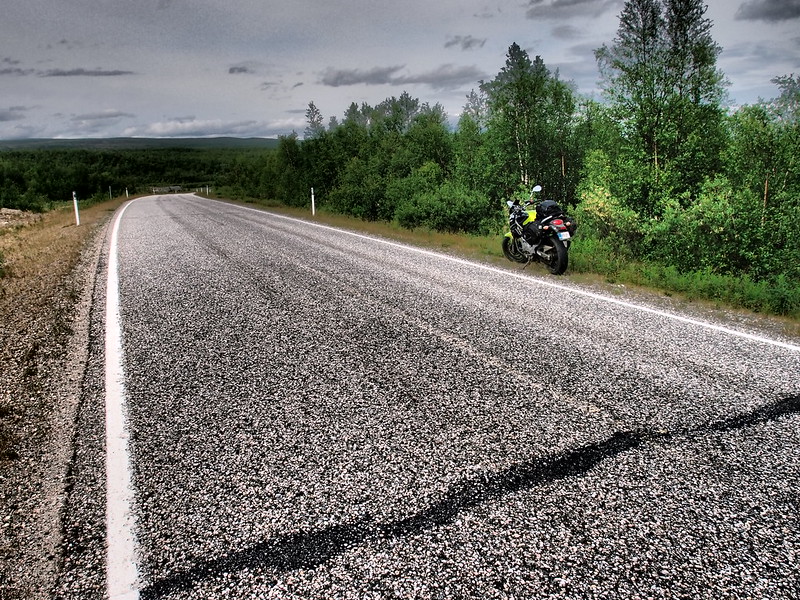
The Nordkapp Tunnel is no longer a toll road, access to the island is free as of the summer of 2012. Access to Nordkapp itself is 235 NOK, or 160 NOK if you don't want to watch the movie. Apparently you can get there really early and get on the grounds before the ticket sellers; some people just drive up to the gates and turn around, to avoid paying. My suggestion is to just pay up. If you got this far, you might as well go all the way to the tip of the cape. And the ticket price is part of what pays for the upkeep of the 35 kilometers of absolutely beautiful mountain roads that you will get to enjoy twice!
My Personal Experience
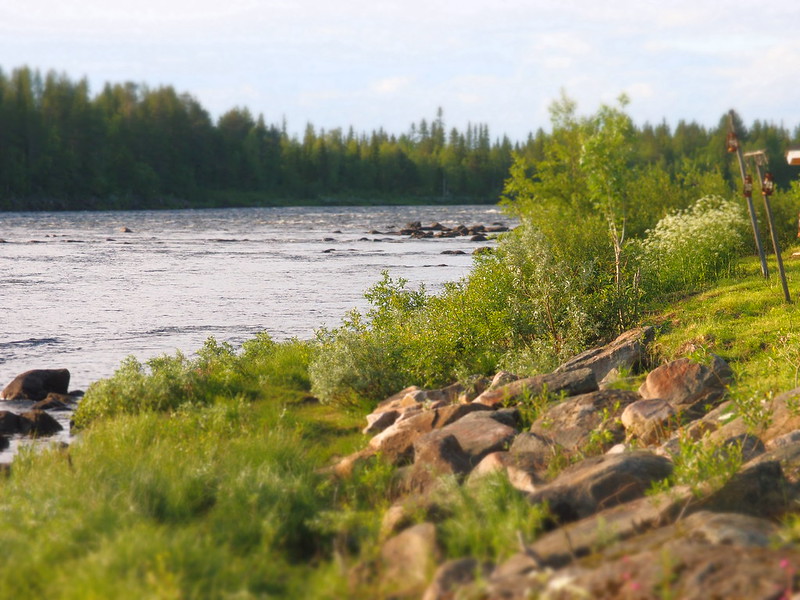
With a few exceptions, Finland is not an interesting country to traverse on a bike. There's some good lake scenery in the middle, and going up from Helsinki, you should take the time to go on the lake route between Lahti and Jyväskylä. The rest of it is going to be fairly
fast, safe, and uneventful. The road quality is mostly very good, and once you get past Kemi and Tornio, traffic will be light. There are occasional speed cameras, but they are clearly signposted and visible (and anyway, motorcycles don't have front license plates). In my entire long-way-around trip through Finland, I saw maybe three police vehicles, and all of them were vans - community cops, not highway enforcers.
Tornio and Rovaniemi are the last bastions of civilization - the last towns on the way north that have giant supermarkets where you can buy cheap socks, underwear and warm clothes. I paid five euros for a fleece to wear under my riding jacket. In an expensive country, I cannot overemphasize how useful a big Prisma can be.
Biker culture in Finland is excellent. Remarkably, car drivers have a lot of respect and goodwill towards bikers. Very often, I would come up behind a car on a two-lane road with twin solid lines (forbidding overtaking via the opposite lane), and the car in front would hug the shoulder to let me pass within the same lane. The local traffic is mostly going at 20km over the posted speed limit. You don't need to go any faster than that - it gets stressful and uncomfortable, for very minor time gains.
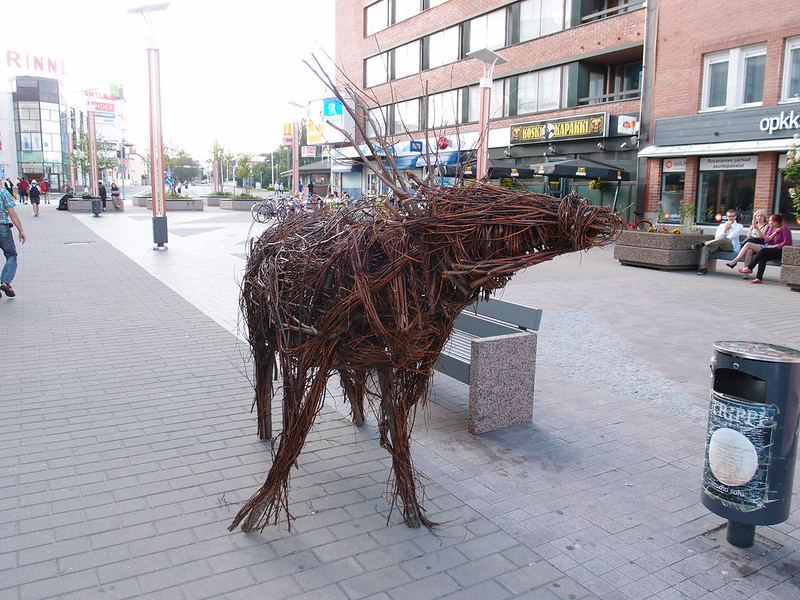
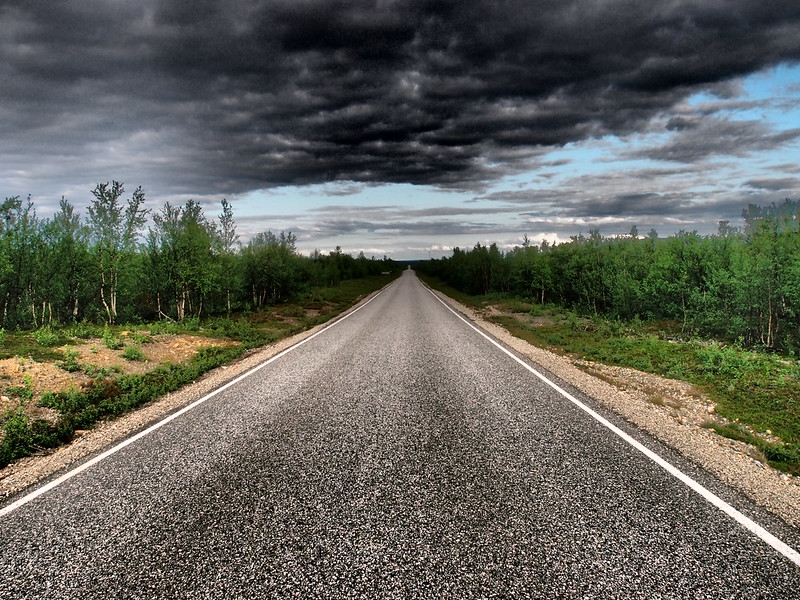
Beware of reindeer. This warning is repeated often, and for good reason. It is not a question of whether you will happen to see reindeer on the road. You definitely will, more than once. Finnish main roads have clearcut areas on both sides before the forest line starts, so as long as you're paying attention, you will probably see the reindeer in time to slow right down. Watch for oncoming traffic flashing their high beams at you as a warning.
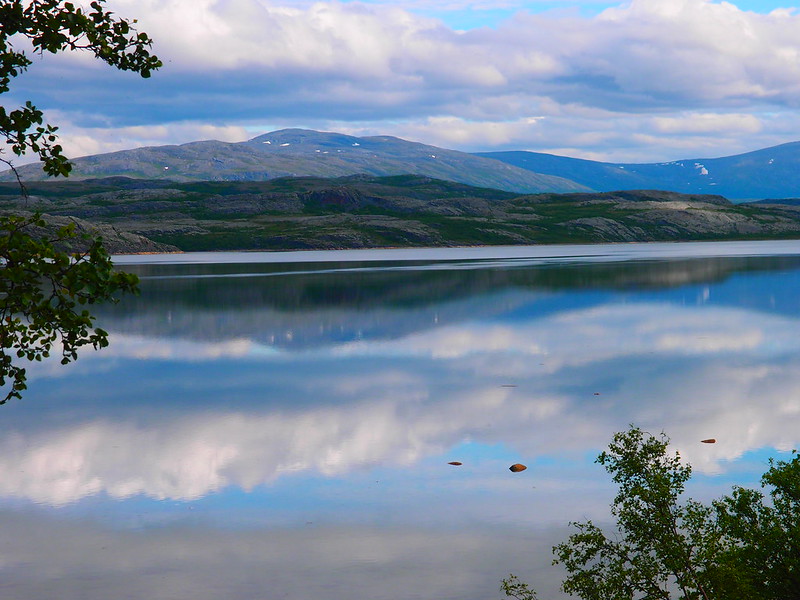
Almost all of my northbound leg was on the main road, except for a small detour to the lakes. Up past Muonio, I turned off Route 4 and filled up at Enontekiö for the final push over the mountains into Norway. This was where the really beautiful scenery and the really fun roads started. The last fifty kilometers or so to Alta were an absolute blast. Alta itself is a boring small town with nothing to recommend it other than an H&M where you can replenish your supplies of socks and underwear.
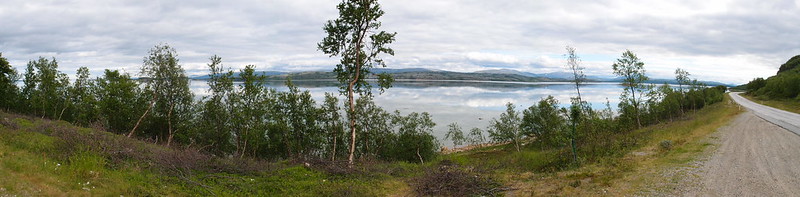
On my way back down, I took the eastern route. Lakselv, a largish village half way to the Finnish border, has the best motorcycle maintenance infrastructure for a few hundred miles in any direction, and a stunningly helpful Tourist Information office, who will go out of their way to solve your problem. Karasjok, the last town before the border, has a couple of supermarkets - quite relevant, because there's nothing on the Finnish side until you get to Ivalo. The eastern Finnish towns are not quite as well-connected - I had to go a fair way back west to get to Rovaniemi, then take secondary roads southeast to Kajaani and Lappeenranta.
Accommodation
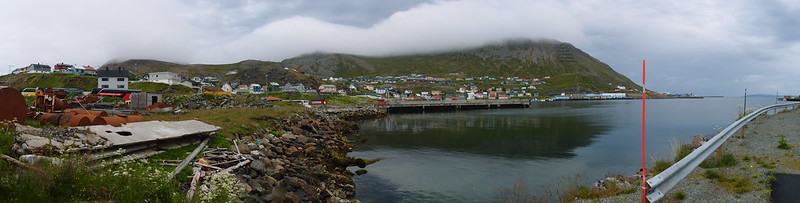
Be prepared for the fact that Finland and Norway are some of the most expensive countries in the world. Norway is at least beautiful, while Finland is mostly boring. Hotels will be unjustifiably expensive - they can charge that because you have very little choice, there isn't enough demand to drive real competition, and the rates are mostly designed for business travelers who aren't paying out of their own pocket. I can honestly say that the least value I have ever gotten out of a hostel was at the Vandrerhjem in Honningsvag, the last town before Nordkapp (some 35 km away): almost 70 euros for a very basic single room without a toilet or shower. I paid around the same in Rovaniemi, Kajaani and Lappeenranta, but those were proper ensuite hotel rooms. I've paid more, in Singapore, New York and Melbourne, but those were actually fascinating cities. Honningsvag is simply conveniently placed for Nordkapp - there is absolutely nothing else to recommend it.
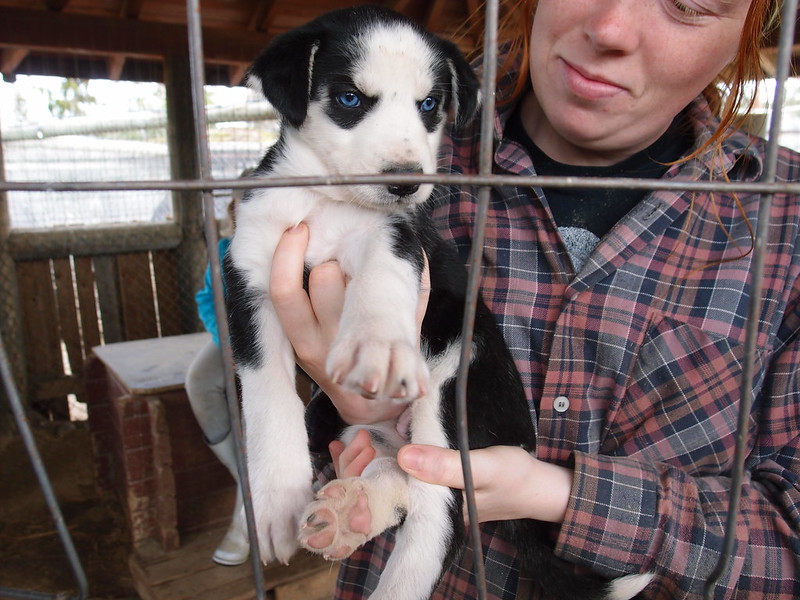
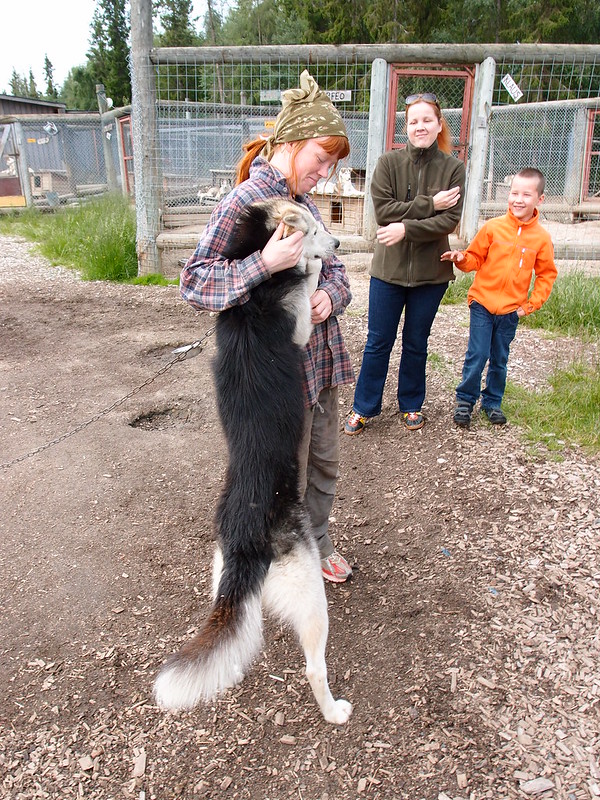
You should check the usual sources for cheap accommodation - I use AirBnB, Hostelworld and Booking.com/Agoda, although even these are of limited use when hunting for bargains in Lapland and Finnmark. Unless you want to go the whole tent-in-a-field route, your best choice is campgrounds: you can get a cabin, with beds and heating, for as little as 15 or 20 euros a night - and it gets even cheaper if there are a few of you sharing it. On the way north, I stayed at an AirBnB location in Oulu and the Harriniva campground in Muonio. The latter is a pretty cool place, with various comfort options - from hotels to tent pitches - and on-site activities, including the world's biggest sled dog center. Apparently it is very important that young huskies get used to humans early on, so visitors are ruthlessly exploited to give cuddles to husky puppies. This is the best seven euros you will spend on your entire trip. (Consider that seven euros is also what you will be paying for a can of disappointing beer.)
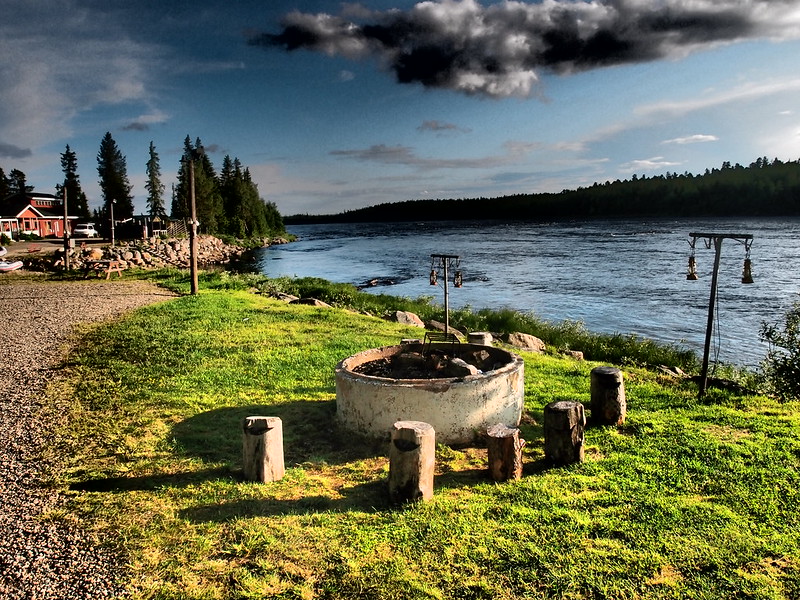
On my way down, I spent the night at Neljän Tuulen Tupa, a campground improbably placed just a few kilometers off the junction between the westbound road to Karasjok and Nordkapp, and the northbound road to absolutely nowhere. I can confidently recommend this campground. It's not a very good one, but it's 15 euros per night, and this is Finland.
Fuel
In the summer of 2012, petrol in Finland was 1.6-1.7 euros per liter; in Norway, it was over 2 euros per liter. For Americans, that's just about 10 dollars per gallon. One of the reasons why so many people take their bikes up here is because of mileage: I could not afford to do 4000km through Scandinavia in my car.
The most important fuel-related thing is:
keep an eye on your range. North of Tornio, villages and gas stations get rare. It's not actually a big problem if you stay aware of how long it's been since you've filled up, and how far you can go on a tank. For example, my Gladius has a 14-liter tank with a comfortable range of 200-230km, and the maximum range I got anywhere on the trip was 290km. That was literally riding on fumes, I barely made it to the next station. The safe choice is to
be aware of the map, of your riding schedule for the day, and think of whether there's another population center coming up within your range. Stopping often is not actually a good idea: you want to keep up a good average speed, and if you've only done 50km or so since your last fillup, you might only be able to fit less fuel in your tank than the pump's minimum sale amount. For me, I filled up after no less than 100km, and started looking for a station as soon as I passed 180km or so. Having a digital dash with multiple trip meter readouts is a big help; if you're riding an older bike with a manual odometer, learn to do math in your head.
You won't always have a choice of gas station brands, but as long as you're in a largish town,
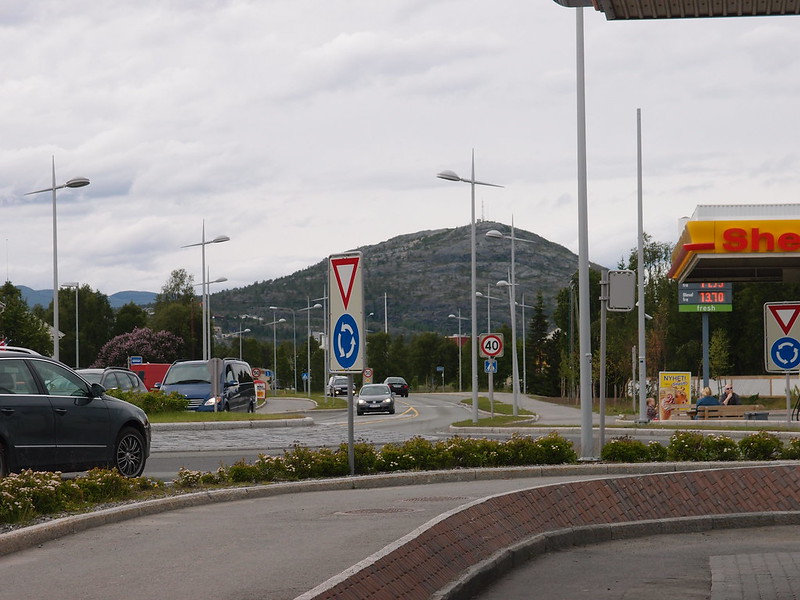
Shell is your friend. Shell stations are almost exclusively manned (not automatic), they stock V-Power gas, and they have a good selection of consumables such as engine oil. All of this is important.
- Automatic gas stations in Finland, especially Neste ones, will very frequently refuse to accept credit cards issued outside Finland. I'm not even sure they take cash, but if so, that's still not a good option: they don't take coins or give change, the smallest paper bill is 5 euros, and you will want to fill up the tank to the brim at every opportunity. You can usually choose a "pay at the cashier" option if there's a shop attached, and you can just tell the clerk that you want to fill up the tank - they can set the pump to give you whatever amount of gas you need and pay later.
- If the pump gives you an option of paying by card right there, or paying at the cashier, choose the latter. You're losing a couple of cents on the liter, but cashiers will only charge the actual amount you bought to the card. Automatic terminals will reserve money on your card before they let you start pumping. This reservation will be released eventually, but it will take a few days. Some terminals ask you how much money you want to reserve; others don't. My main bank card looks like a credit card to terminals, but is actually tied to my account balance: any reservation temporarily decreases the money I have in the bank. A Finnish ABC station reserving 20 euros while I pump 16 euros' worth is not a big deal. A Norwegian Statoil blocking out almost 200 euros (when I canceled out of the first transaction by mistake and started again), not from a bank's credit line but from my actual balance, is a major inconvenience.

Most gas stations in Finland and Norway sell E5 or E10 gas. Regular 95-octane, which I use in my bike at home, comes in the form of E10 in Finland - ten percent ethanol. This is actually not very healthy for an engine that wasn't designed for it (though modern bikes with electronic fuel injection should cope fine in the short term), and it definitely increases the fuel consumption. 98-octane is usually E5, five percent ethanol, which is marketed as safe for any petrol engine. Shell V-power is 100% dinosaur juice. It's higher-octane, provides better engine performance, and while it's more expensive, it does lower your fuel consumption. Again, this is not a cost question - it is a range question. Range is vital. Anything that improves your range is worth doing.
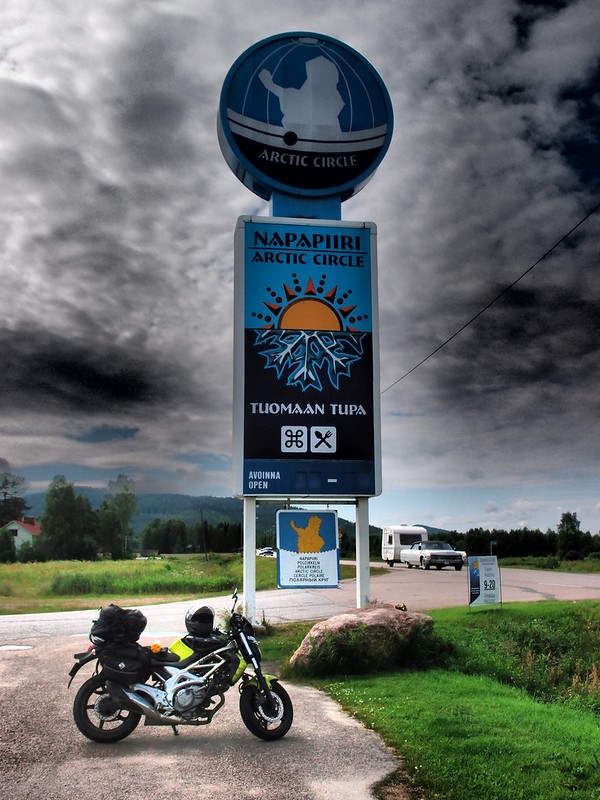
You are riding every day, long distances, at high speeds. It's quite likely that you'll burn some oil, even in a healthy engine. Shell stations have a good selection of automotive goods, including high-performance four-stroke motorcycle engine oil. I know because I bought a liter of it once, and then checked other Shell stations later out of curiosity.
That said, there may be times when you have no choice, when the only fuel available to you is crappy 95-octane E10 from a suspicious rural gas station. That's part of the adventure. Make a mental note to stop at the next Shell station you see, and at least be thankful that the only fuel station within range was not a diesel-only Neste Truck!
The Details
My Gear
Bike: 2009 Suzuki SFV650 Gladius, Oxford Daytona heated grips, Renntec crash bars, Puig windscreen.
Armor: Modeka Yuma jacket, Modeka Quebec Pro trousers, Modeka Sahara Traveler gloves, Falco Mixto boots, HJC ZF-9 helmet.
Luggage: Mototravel soft sidebags, Adidas backpack attached with elastic cargo straps.
Sanity: HTC One X with Navigon offline navigation and about ten gigabytes of audiobooks, Zagg Sparq battery pack, HP Mini 5103 netbook for the camps.
My Route
Day 0:
Tartu-Tallinn (via Piibe mnt) -
200km or so.
Day 1:
Tallinn-Helsinki (Viking Line XPRS ferry) - 2,5 hours and 80km.
Helsinki-Lahti (freeway)
Lahti-Jyväskylä (routes 314/612/610 through the lakes)
Jyväskylä-Oulu (straight shot up route 4/E20)
Total riding: 660km
Day 2:
Oulu-Kemi-Tornio-Muonio -
350km or so.
It is possible to cross the river at Tornio and ride much of this stretch on the Swedish side, but I didn't.
Day 3:
Muonio-Enontekiö-Alta-Honningsvag -
500km or so.
Day 4:
Honningsvag-Nordkapp-Honningsvag-Lakselv-Karasjok-Kaamanen -
325km or so.
Day 5:
Kaamanen-Inari-Ivalo-Rovaniemi -
365km or so.
Day 6:
Rovaniemi-Kajaani -
335km or so.
Day 7:
Kajaani-Kuopio-Mikkeli-Lappeenranta -
440km or so.
Day 8:
Lappeenranta-Kouvola-Helsinki -
225km or so.
Helsinki-Tallinn - Tallink Star, 2 hours and 80km.
Day 9:
Tallinn-Tartu (via main road) -
190km or so.
My Costs
Average fuel economy: ~4.5 liters per 100 kilometers.
Average fuel cost in Estonia: 1.38 euros per liter.
Average fuel cost in Finland: 1.7 euros per liter.
Average fuel cost in Norway: >2 euros per liter.
Tallinn-Helsinki ferry, Viking Line XPRS: 41 euros
Helsinki-Tallinn ferry, Tallink Star: 48 euros
Accommodation: Oulu (AirBnB) - 35 euros, Muonio (Harriniva, cabin) - 20 euros, Honningsvag (Vandrerhjem hostel, single room) - 65 euros, Kaamanen (Neljän Tuulen Tupa, cabin) - 15 euros, Rovaniemi (Hostel Rudolf, single ensuite room) - 48 euros, Kajaani (Hotel Kajaani) - 65 euros, Lappeenranta (Guesthouse Kantolankulma) - 67 euros.
Nordkapp entry - 32 euros, although you can pay less if you don't want to see the movie.
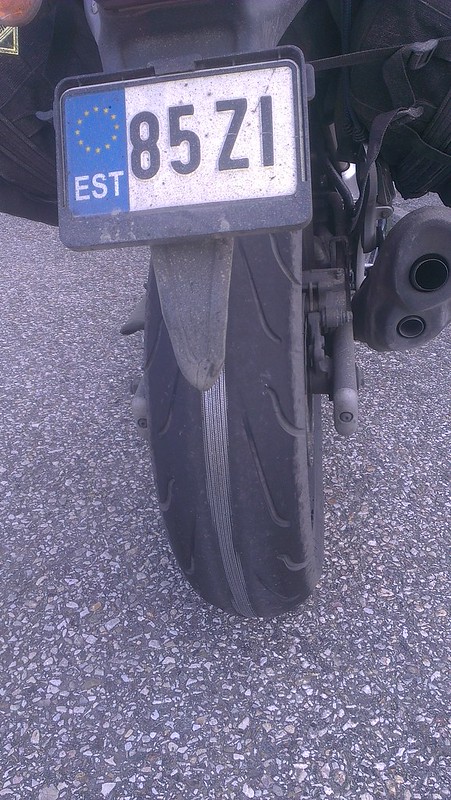
This does not include food, entertainment, or incidental costs down to my own stupidity, such as having to buy a new rear tire in Lakselv, middle of the frozen Norwegian outback, for 2500 NOK - 344 euros, at least 200 euros more than the same 170/60R16 Michelin RoadSport2 would have cost back home.
As always with unconventional travel: expect it to cost a lot more than you envisioned, and have a budget reserve to get you out of tight spots. Finland and Norway are expensive places, but the people of the North don't abandon travelers.