Showing posts with label Europe. Show all posts

Monday, September 17, 2012

EGF is the new ACTA

But not in the same way that you might think.

EGF, or EUGENDFOR, or the European Gendarmerie Force, is a military police force under central EU control - specifically, under control of a council of representatives from participating states. It can be deployed to any EU state, or any non-EU state, by request of the receiving state's government.

I came across a link to this article, mentioning that there was a protest against the EGF and that its critics claim that it is a Gestapo-type organization, not subject to any legal control by the state to which it is deployed; it is all-powerful and cannot be stopped.

This alarmist attitude reeked of the kind of blinkered charging activism that we saw before with ACTA. Unlike most of the well-meaning but apparently attention-deficient protesters, I am at least willing to give European leaders enough of the benefit of the doubt to spend ten minutes reading the actual treaties.

To reiterate my ACTA disclaimer: I am not a lawyer. I am just a person who gets paid for reading and understanding legal texts.

The founding treaty of the EGF is easy to find: here it is. Like ACTA, it's not really as difficult to read as you might expect from a legal document outlining a set of technical issues; I think English-language EU treaties are simpler than many legal texts I've had to translate because they are initially negotiated among non-native English speakers. Language tends to be reduced to the barest necessities of meaning.

In the event, the founding treaty of the European Gendarmerie Force is concerned primarily with issues of who pays for what, and how much stuff can an EGF member bring with them tax-free when relocating to the force's HQ in Italy. As always, I encourage you to go and read the full text for yourself. But the concern is that the EGF can be deployed to an EU state and conduct police missions there, including criminal investigative work, without any regard for the laws of that state; the local authorities cannot challenge the EGF's actions. So here are the relevant quotes from the EGF treaty.

In the section outlining the general terms:

EUROGENDFOR Personnel and their family members must respect the law in force in the Host State or the Receiving State. In addition, EUROGENDFOR Personnel must refrain from carrying out any activities incompatible with the spirit of this Treaty while on the territory of the Host State or the Receiving State.

In the section outlining criminal liability and jurisdiction:

The authorities of the Host State or the Receiving State shall have the right to exercise jurisdiction over military and civilian personnel and their family members, with respect to offences committed within their respective territories and punishable by the laws of that State.
There is more stuff there, including the interesting provision that if an EGF official commits a crime that is punishable under the laws of the sending state, but not the receiving state, then the sending state can prosecute them; and if the official commits a crime that is punishable in the receiving state but not the sending state, then the receiving state can prosecute them.

So yes, EGF officials are indeed subject to the laws and oversight of the country in which they are operating.

In fact, there is exactly one iffy paragraph in the treaty, where I think the confusion may have originated:

A member of EUROGENDFOR Personnel shall not be subject to any proceedings for the enforcement of any judgement given against him or her in the Host State or the Receiving State in a matter arising from the performance of his official duties.
However, this is part of an article specifically titled "Damage to third parties". The point of the paragraph is that if an EGF official causes property damage in the course of executing their mission, that official is not personally liable for compensating the damage. (The EGF and the involved governments are liable, though.)

So, as usual: before you get outraged by something, make the effort to do the very minimum of research. (Or at least do what Jacques Zammit did and ask me to do the research for you. My payment is the satisfaction of subtly telling people they're being stupid.)

Wednesday, August 08, 2012

Nordkapp By Motorcycle

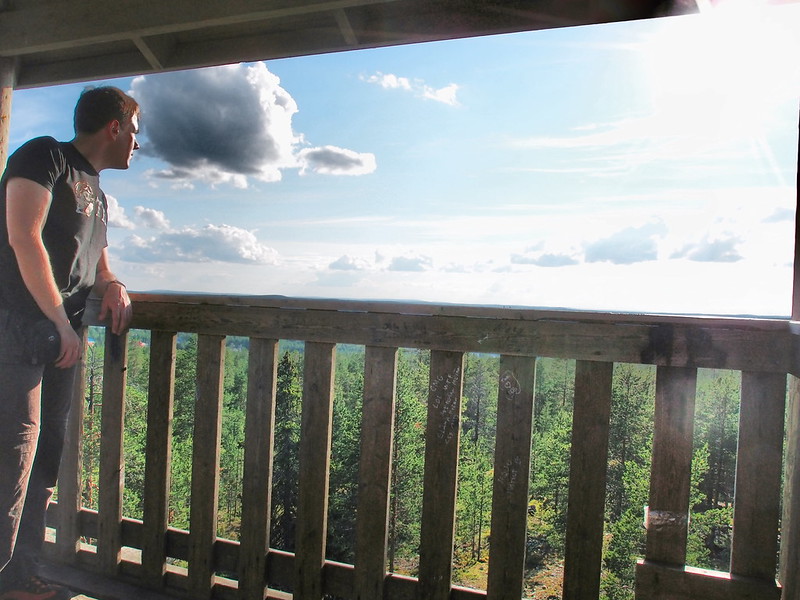
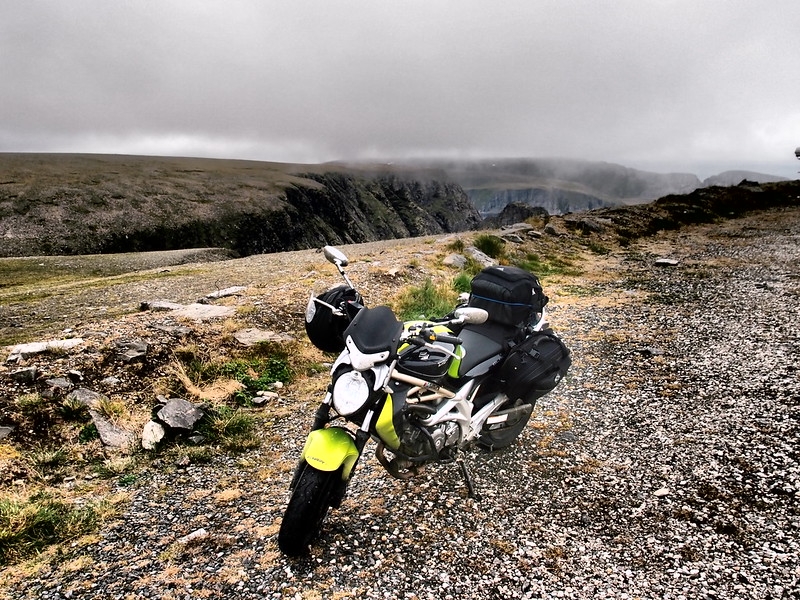
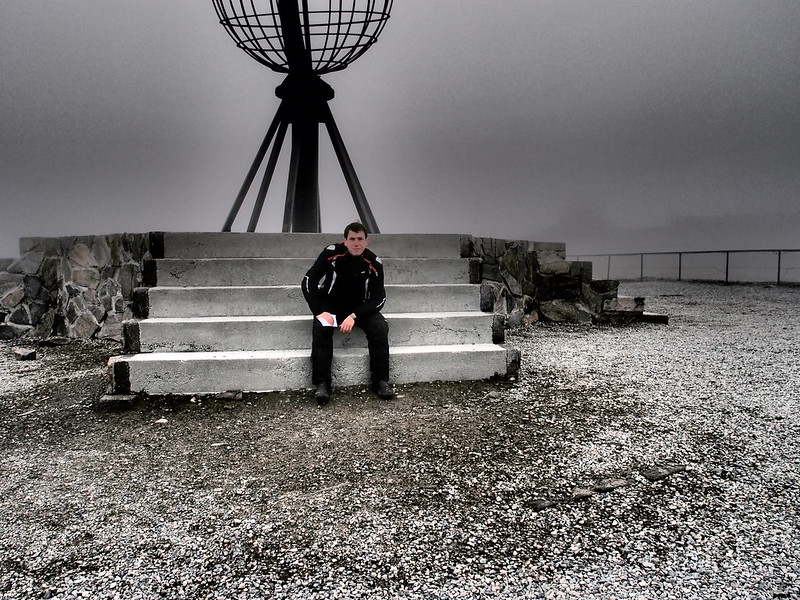
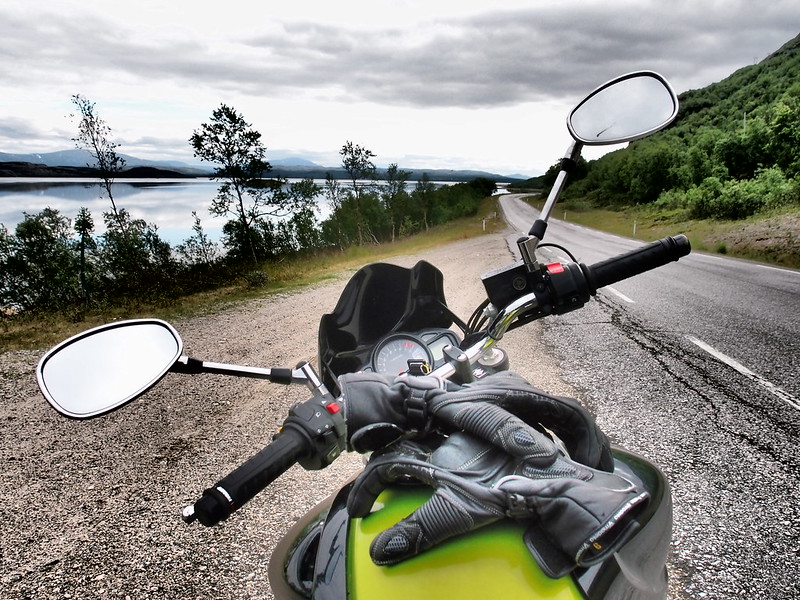
Think of this as one of those "For Dummies" guide, written by a dummy. This is my first riding season, I only got my license last September and bought the motorcycle in December. This July, I had vacation time to spare and no desire to go lie on a beach, so I got an early start on every self-respecting rider's mandatory pilgrimage to the northernmost point reachable by paved road: Nordkapp.


My journey took me a week and some 4000km, and I took two different roads through Finland: up via the more populated western coast and Swedish border, and back down via the mostly empty northeast. Masses of bikers make the trip up to Nordkapp every summer, but in preparing for my trip, I found that there aren't very many practical reports and descriptions. Those I did find were quite helpful, so I hope others will find use out of what I can now contribute. If I miss a question, feel free to ask it and I'll answer if I can.


Preparation

You don't need a touring or adventure bike to make this trip. I rode a naked bike with a stock saddle (known for being not particularly comfortable), and although it was inconvenient on the freeways, I massively enjoyed it on the mountain roads of Norway. Whatever kind of bike you have, you can and should take it to Nordkapp. (If you made the trip on a seatless trial bike, or a 50cc scooter, I salute you and want to buy you a beer.)


That said, I suggest you start out by doing a daytrip of a few hundred kilometers around your home, and think of whether you can sustain that kind of riding for a whole week. Remember that even on a long riding day, you will be stopping for gas a lot more often than you would with a car. Between that and stops for lunch, taking photos, etc., you can give your ass enough of a rest.


With very little long-distance riding experience, I figured out that the maximum comfortable daily riding distance is about 500km. I did 660km on my first day, and was absolutely exhausted - it's definitely not something I would have liked to do every day. Later on, I had a few short 350km days, which allowed me to check out late, and get to the next town early enough to explore.


Pay attention to your bike's wind protection. Even a small windscreen will help a lot if you're normally riding a stripped streetfighter. If you've got a chopper without a windscreen, dress extra warm.

Equipment

You need an appropriate riding suit, and warm clothes. Nordkapp is literally the northernmost point reachable by paved road, and once you pass the Arctic Circle, you still have two days of riding due north to get there. Tight leathers won't help. You need a good textile suit, windproof and waterproof. (Some people use rain overalls, but those are inconvenient and more or less single-use.) Additional thermal layers help. I had a full matching suit with a thermal lining for the jacket and a waterproof lining for the pants, and I still had to buy long underwear and a fleece once I got north of the Bay of Bothnia. The rule of thumb is: wear what you would if you were in the ambient temperature, then add your riding gear on top of that, and make sure you're waterproof. It will rain.


You'll probably wear whatever helmet you already have, but if you have a choice, I'd recommend a full-face enclosed one. The ones with flip-up jaws are nifty, but you rarely actually need that function; and a full-face helmet will be both lighter and quieter at high speed. A built-in retractable sun visor can be very helpful.


The one thing you probably don't need on this trip is a dedicated GPS device. Regular navigators are not rugged enough to be used on a bike, where they are exposed to rain and wind and road grime. Motorcycle navigators are unreasonably expensive. Both are clunky to mount on your tank or steering handles, and distract you from the road. Most of the road to Nordkapp is well-signposted; for those very rare cases where you need to get your bearings, you can probably just use the GPS in your phone. (Make sure to pre-load the maps for the countries where you're going. You don't need turn-by-turn guidance, but you do need an offline copy of the map.)

Luggage

This depends largely on your budget, preference, and type of bike. Lapland and Finnmark (the northernmost provinces of Finland and Norway respectively) have pretty good travel infrastructure, but these are still very sparsely inhabited places. You can't just bring your credit card, at least if you don't want to walk around in your riding gear and soaked T-shirt.


You don't need to bring a tent - I didn't - but a sleeping bag is a good idea. Other than that, have at least one pair of normal trousers, comfortable shoes, and a softshell or rain jacket in addition to what you wear on the bike. A fresh pair of socks and underwear for every day you're going to be on the road - these can be cheapo supermarket items that you throw away at the end of the day. Bring spare provisions. I had a couple of ramen cups and a bunch of cereal bars. Canned food is good, but heavy.


Don't encumber your bike too much (you want to have fun riding!), and make sure the luggage is secure and comfortable, and does not restrict your body movement. The one thing I would not recommend, on a sporty or naked bike at least, is a tank bag. You'll want to lean forward at some point, if only to reduce your wind resistance, and it's good to be able to get right onto the tank. There isn't anything inherently important about a tank bag - the roads are straightforward, you don't need a map, and shouldn't be taking your eyes off the road anyway. Between saddlebags and a rear bag/backpack, you should have enough space. Remember the ultimate maxim of travel packing: if you can't carry your luggage up the stairs yourself in one go, you've brought too much.
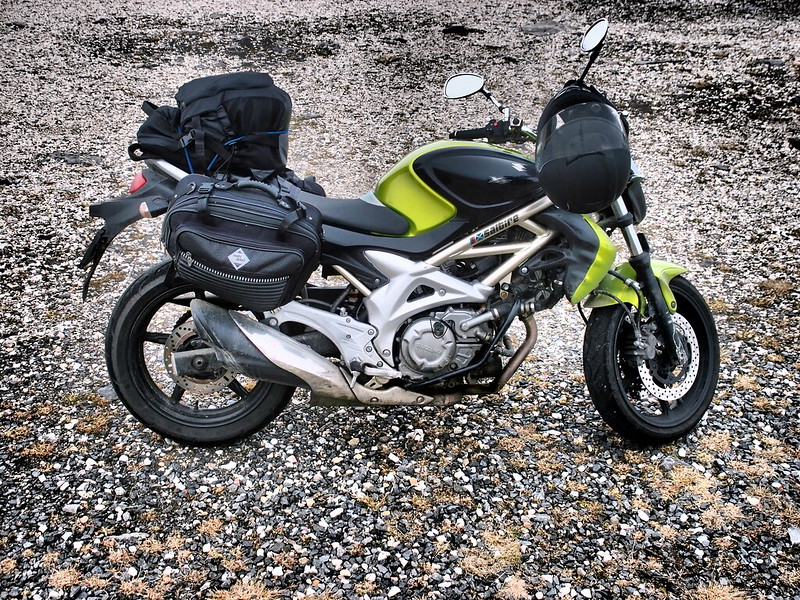

I had a set of soft saddlebags that I got for 40 euros, used, plus a largish backpack fixed on the pillion with elastic cargo straps. This isn't as good as a full set of hardcases on fixed racks, but it got the job done, and it was a hell of a lot cheaper. Look on eBay, and particularly on your local biker forums: you've got a good chance of picking up a cheap set of luggage from someone who just used up all their vacation time and won't be going on long trips again until next season.

Sanity

Riding for hours upon hours in a day, and staying in unfamiliar places, often campsites without any major population center or source of entertainment attached, can be lonely. The enforced isolation is certainly one part of the beauty of long-distance motorcycle trips - you're forced to clear your mind in order to ride safely - but at some point, it still gets boring. Music helps; audiobooks help more. A good audiobook or a set of podcasts will distract your mind without affecting your body movement.

There are two important things to remember here. One is battery life. Many touring/adventure bikes have 12V power outlets (like the cigarette lighter outlets in cars), and it's trivial to install an aftermarket one on any bike, under the seat for example; any electronics shop will have a cigarette-lighter-to-USB plug. The inconvenience with charging your audio player on the move is in handling the earphone cord. A helmet-mounted Bluetooth speaker system, or any other Bluetooth setup, solves that. (You can get a Bluetooth dongle with a standard 3.5mm output, pair that to your phone, and use whatever headphones you're used to.) The big problem is that any Bluetooth system introduces a new battery that can run down at an inconvenient time. Overall, I prefer to put the phone in my jacket and use wired earbuds. I have an external battery pack with USB output, which is too bulky to use on the move, but it's enough to juice up the phone while I've stopped for lunch. Remember that if you're traveling abroad, you probably don't want to pay data roaming charges; turn off the WiFi, Bluetooth, mobile data and background sync options, and even a fancy new smartphone like my HTC One X will last you a full day's riding.

The other important factor is your earphones. If you're not riding a tourer or adventure bike with great wind protection, you'll have a wind noise problem. Most earbuds are not loud enough. I don't have a full helmet-speaker system in my current gear, but I used a Cardo Scala Rider during my training, and it wasn't loud enough at highway speeds on a naked bike. My favourite behind-the-ear phones - Sennheiser PMX-60s - would not fit inside the helmet. What you need is canalphones, the type of foam-tipped compact earbuds that get screwed way down into your ear canals. The weapon of choice seems to be the Sennheiser CX-300, but I just used a pair of cheap Vivancos that I had lying around - they were adequate for spoken word content.

If you've got good experiences with audio setups, I'd love to hear about them!

The Road

Nordkapp is your destination, and while there are some magnificent roads on the final stretch, you have a few choices of how to get there. The best route I can think of is to get yourself to southern Norway and ride all the way up along the coast. From Central Europe, you can bypass Poland entirely by taking a ferry out of Rostock or Travemünde, or do the entire trip rubber-to-road by going through Denmark and over to Sweden via the Östersund tunnel. From southeast Europe, I'm told that Belarus actually has good roads and not very corrupt highway cops, but you'd need to get a visa.


If you're coming from further away, I really do suggest you try to avoid going through Poland if you can help it. This is based both on my own previous experience and on the opinion of everyone I've asked who's driven through Poland on the way to central Europe and back. The problem is that Poland has an incredibly high volume of transit traffic, including a lot of trucks, and the road network is quite patchy. There's a really nice autobahn in the middle, but it doesn't stretch to the German or Lithuanian borders, and you'll be breathing diesel fumes in heavy traffic for far too long. From the Polish-Lithuanian border and all the way up through the Baltics, the roads are decent, fuel is cheap, and you can bypass all the big-town traffic until you get to Tallinn.

If you're feeling adventurous enough, and can swing a visa, and are determined to avoid ferries, a detour to St. Petersburg can certainly be worthwhile. The Estonian-Russian border crossing at Narva may be permanently congested, but motorcycles get to skip the line. You may be tempted to take the Russian roads almost all the way north and cross into Norway at Kirkenes (I know at least one guy in St. Petersburg who intends to do just that); I wouldn't necessarily recommend it, but it's certainly going to be less boring than Finland.

Once you get to Finland, there are overnight car-carrying trains out of the big southern cities, and they will take bikes as well, although you don't get a discount on the fare. They're not very frequent, but if there's one that works with your schedule, you can have an easy overnight voyage that will get you up past the Arctic Circle. Depending on your circumstances, it might not even be that much more expensive than riding - but don't fool yourself, it is definitely cheating.

The Nordkapp Tunnel is no longer a toll road, access to the island is free as of the summer of 2012. Access to Nordkapp itself is 235 NOK, or 160 NOK if you don't want to watch the movie. Apparently you can get there really early and get on the grounds before the ticket sellers; some people just drive up to the gates and turn around, to avoid paying. My suggestion is to just pay up. If you got this far, you might as well go all the way to the tip of the cape. And the ticket price is part of what pays for the upkeep of the 35 kilometers of absolutely beautiful mountain roads that you will get to enjoy twice!


My Personal Experience

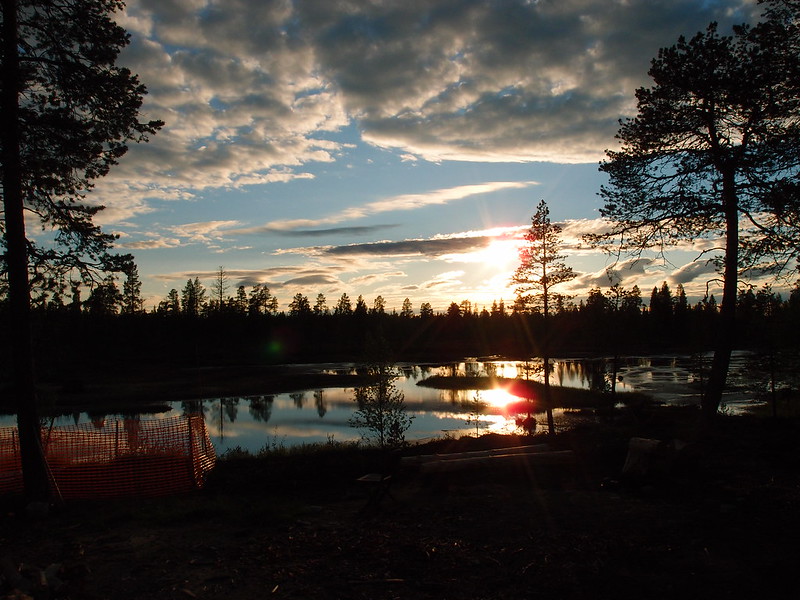
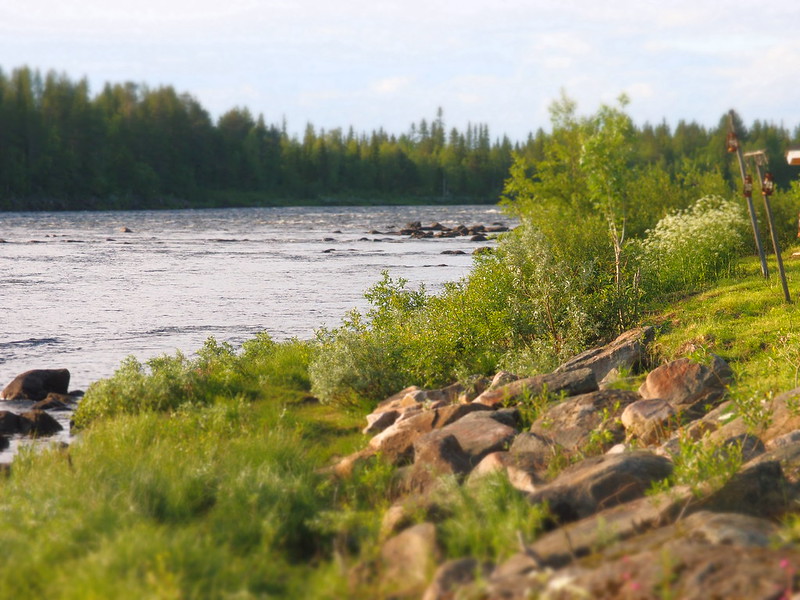
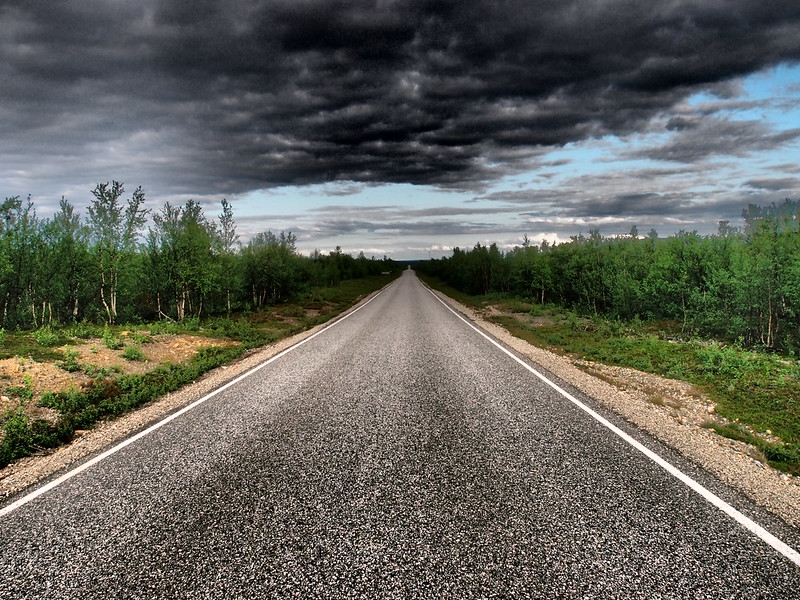
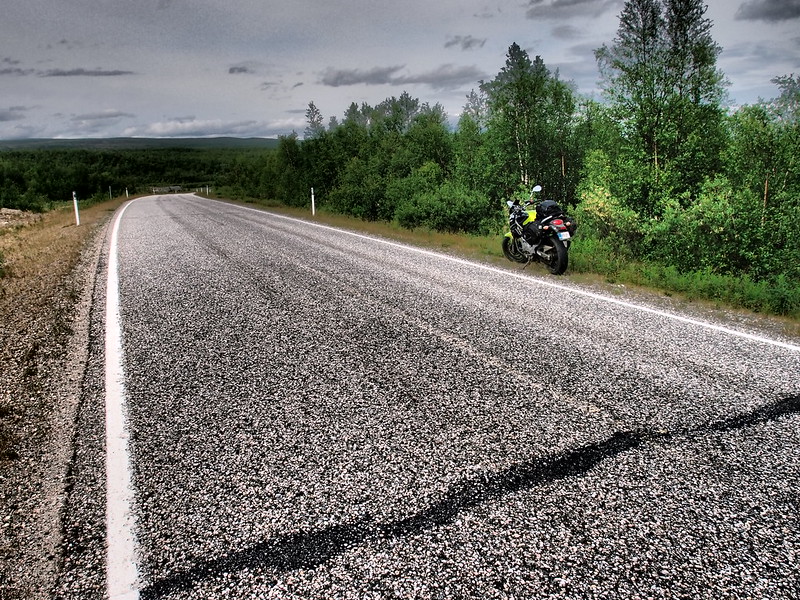
With a few exceptions, Finland is not an interesting country to traverse on a bike.  There's some good lake scenery in the middle, and going up from Helsinki, you should take the time to go on the lake route between Lahti and Jyväskylä. The rest of it is going to be fairly fast, safe, and uneventful. The road quality is mostly very good, and once you get past Kemi and Tornio, traffic will be light. There are occasional speed cameras, but they are clearly signposted and visible (and anyway, motorcycles don't have front license plates). In my entire long-way-around trip through Finland, I saw maybe three police vehicles, and all of them were vans - community cops, not highway enforcers.


Tornio and Rovaniemi are the last bastions of civilization - the last towns on the way north that have giant supermarkets where you can buy cheap socks, underwear and warm clothes. I paid five euros for a fleece to wear under my riding jacket. In an expensive country, I cannot overemphasize how useful a big Prisma can be.

Biker culture in Finland is excellent. Remarkably, car drivers have a lot of respect and goodwill towards bikers. Very often, I would come up behind a car on a two-lane road with twin solid lines (forbidding overtaking via the opposite lane), and the car in front would hug the shoulder to let me pass within the same lane. The local traffic is mostly going at 20km over the posted speed limit. You don't need to go any faster than that - it gets stressful and uncomfortable, for very minor time gains.


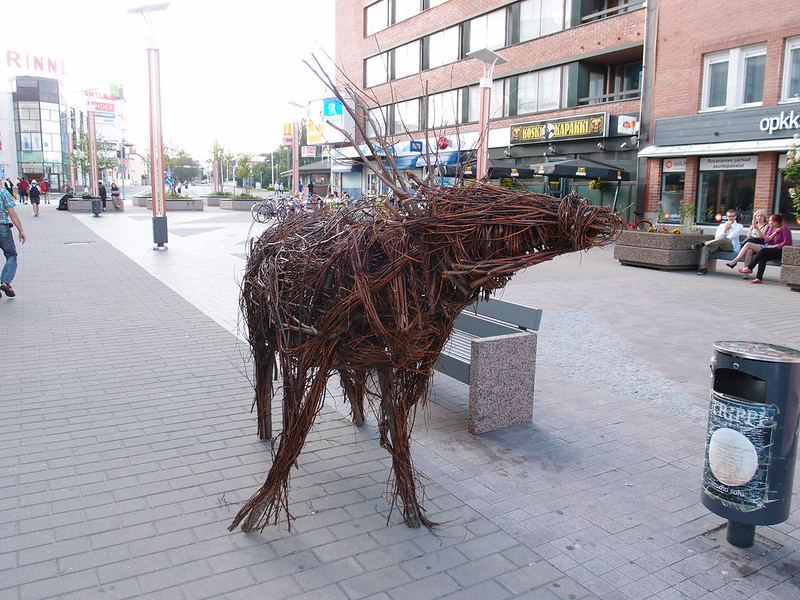
Beware of reindeer. This warning is repeated often, and for good reason. It is not a question of whether you will happen to see reindeer on the road. You definitely will, more than once. Finnish main roads have clearcut areas on both sides before the forest line starts, so as long as you're paying attention, you will probably see the reindeer in time to slow right down. Watch for oncoming traffic flashing their high beams at you as a warning.


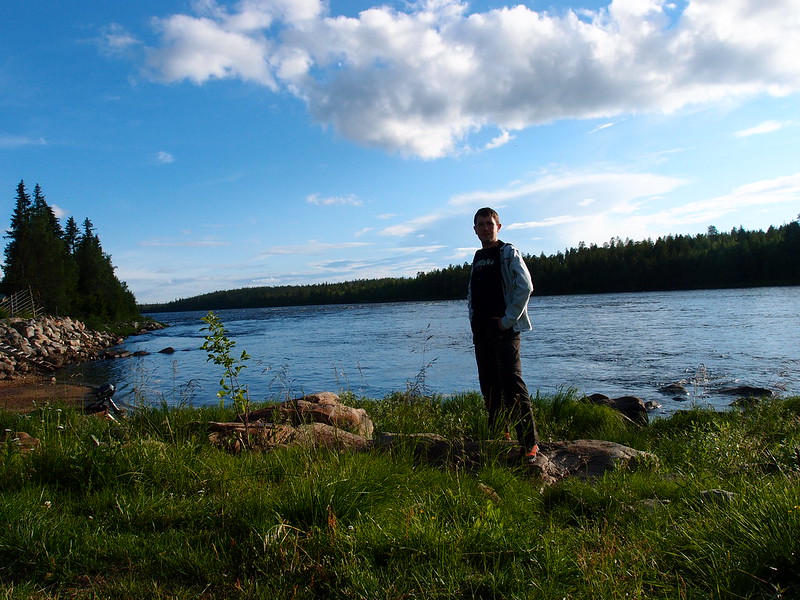
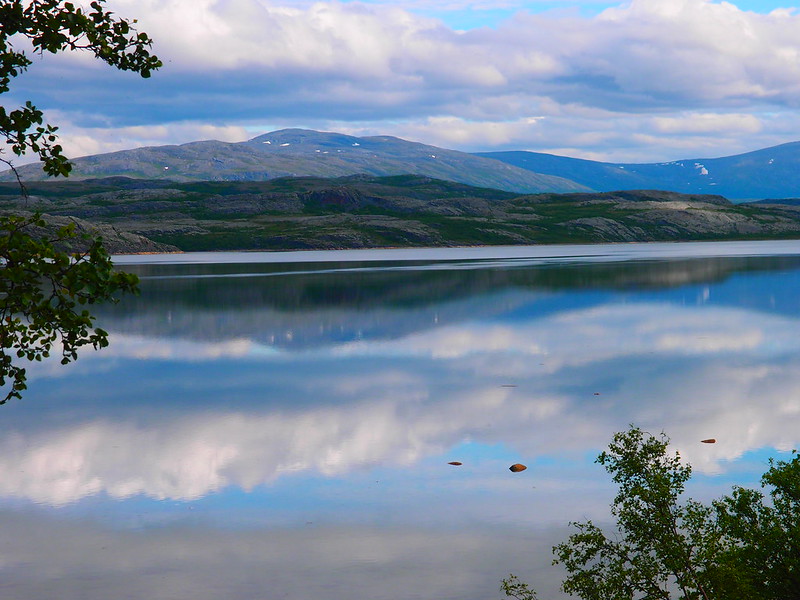
Almost all of my northbound leg was on the main road, except for a small detour to the lakes. Up past Muonio, I turned off Route 4 and filled up at Enontekiö for the final push over the mountains into Norway. This was where the really beautiful scenery and the really fun roads started. The last fifty kilometers or so to Alta were an absolute blast. Alta itself is a boring small town with nothing to recommend it other than an H&M where you can replenish your supplies of socks and underwear.
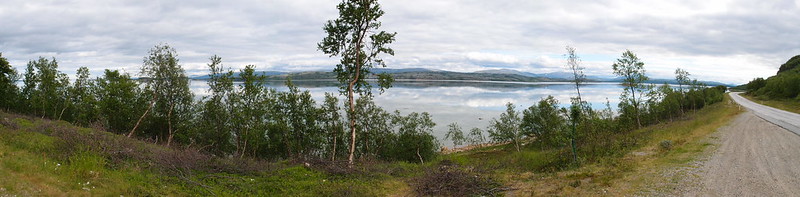

On my way back down, I took the eastern route. Lakselv, a largish village half way to the Finnish border, has the best motorcycle maintenance infrastructure for a few hundred miles in any direction, and a stunningly helpful Tourist Information office, who will go out of their way to solve your problem. Karasjok, the last town before the border, has a couple of supermarkets - quite relevant, because there's nothing on the Finnish side until you get to Ivalo. The eastern Finnish towns are not quite as well-connected - I had to go a fair way back west to get to Rovaniemi, then take secondary roads southeast to Kajaani and Lappeenranta.


Accommodation

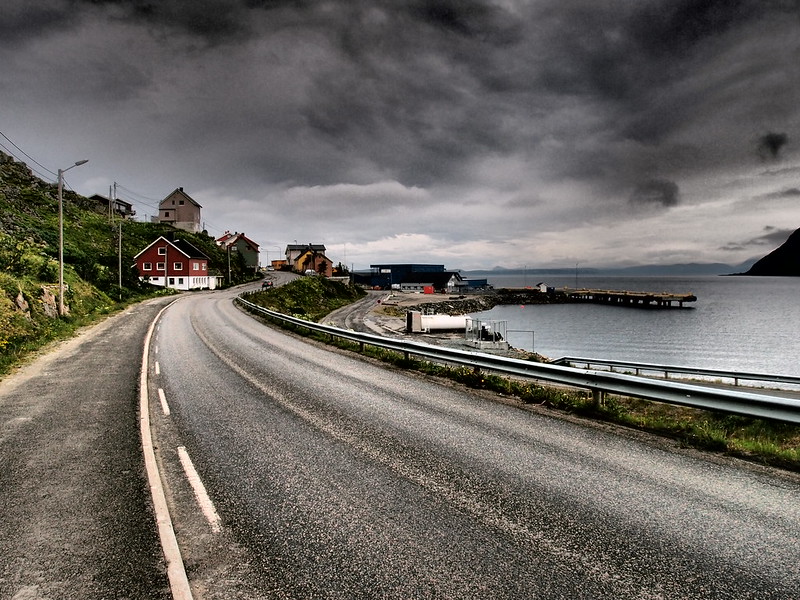
Be prepared for the fact that Finland and Norway are some of the most expensive countries in the world. Norway is at least beautiful, while Finland is mostly boring. Hotels will be unjustifiably expensive - they can charge that because you have very little choice, there isn't enough demand to drive real competition, and the rates are mostly designed for business travelers who aren't paying out of their own pocket. I can honestly say that the least value I have ever gotten out of a hostel was at the Vandrerhjem in Honningsvag, the last town before Nordkapp (some 35 km away): almost 70 euros for a very basic single room without a toilet or shower. I paid around the same in Rovaniemi, Kajaani and Lappeenranta, but those were proper ensuite hotel rooms. I've paid more, in Singapore, New York and Melbourne, but those were actually fascinating cities. Honningsvag is simply conveniently placed for Nordkapp - there is absolutely nothing else to recommend it.
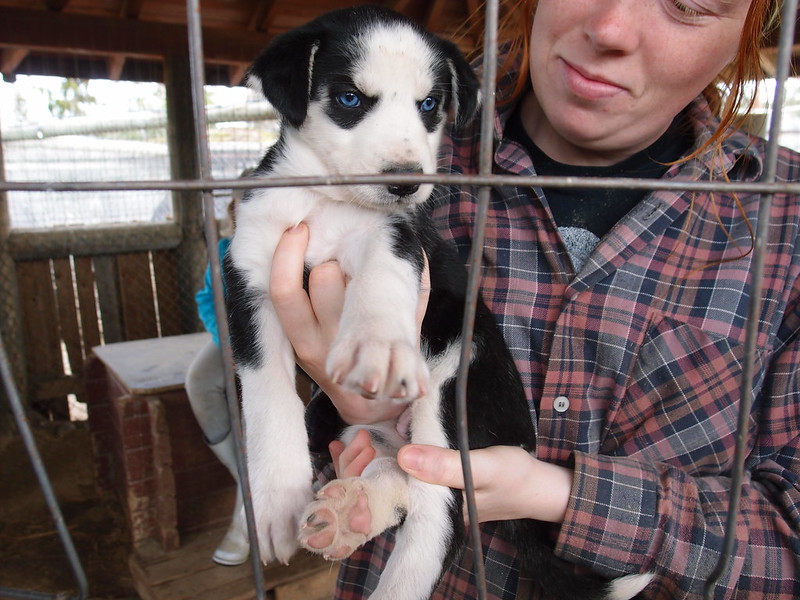

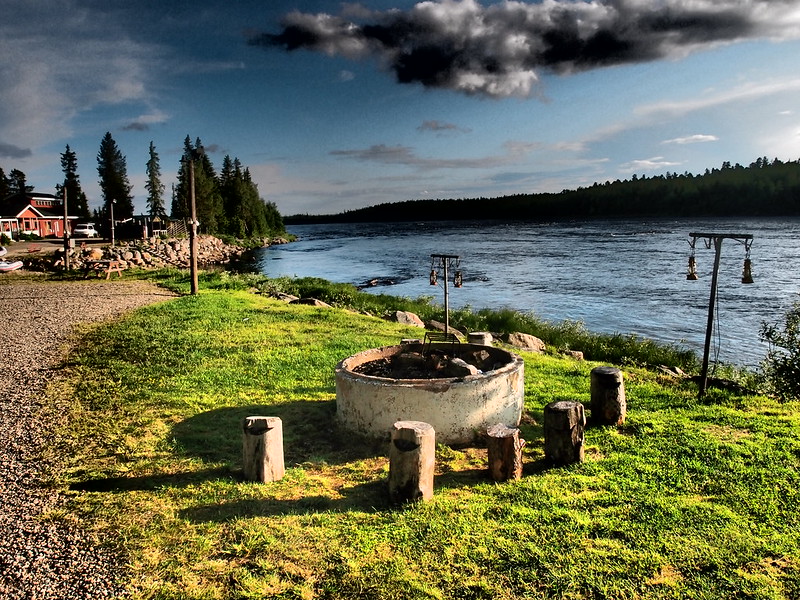
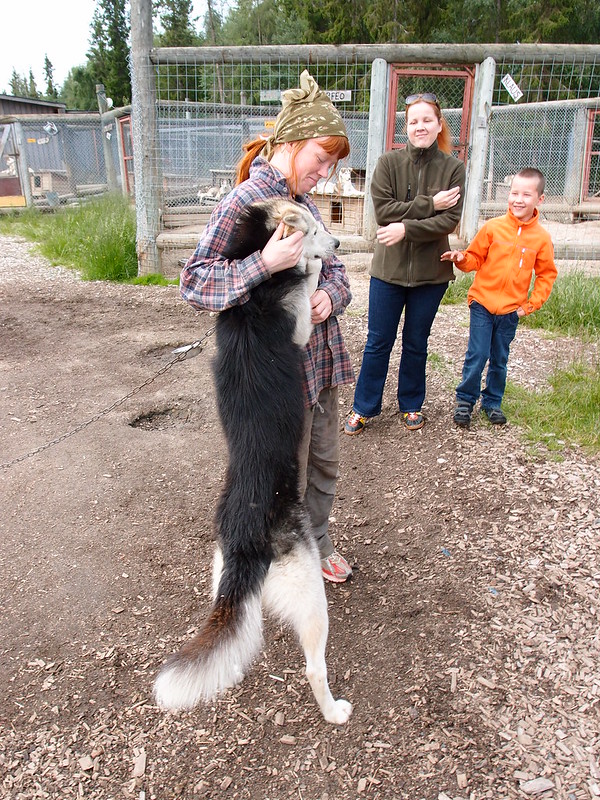
You should check the usual sources for cheap accommodation - I use AirBnB, Hostelworld and Booking.com/Agoda, although even these are of limited use when hunting for bargains in Lapland and Finnmark. Unless you want to go the whole tent-in-a-field route, your best choice is campgrounds: you can get a cabin, with beds and heating, for as little as 15 or 20 euros a night - and it gets even cheaper if there are a few of you sharing it. On the way north, I stayed at an AirBnB location in Oulu and the Harriniva campground in Muonio. The latter is a pretty cool place, with various comfort options - from hotels to tent pitches - and on-site activities, including the world's biggest sled dog center. Apparently it is very important that young huskies get used to humans early on, so visitors are ruthlessly exploited to give cuddles to husky puppies. This is the best seven euros you will spend on your entire trip. (Consider that seven euros is also what you will be paying for a can of disappointing beer.)
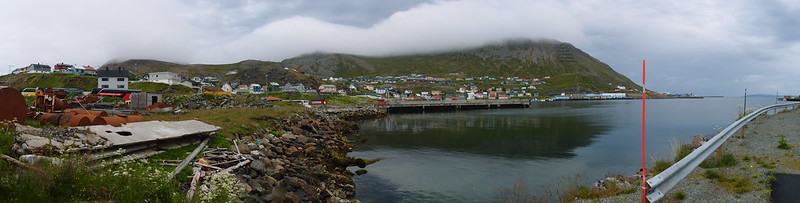

On my way down, I spent the night at Neljän Tuulen Tupa, a campground improbably placed just a few kilometers off the junction between the westbound road to Karasjok and Nordkapp, and the northbound road to absolutely nowhere. I can confidently recommend this campground. It's not a very good one, but it's 15 euros per night, and this is Finland.

Fuel

In the summer of 2012, petrol in Finland was 1.6-1.7 euros per liter; in Norway, it was over 2 euros per liter. For Americans, that's just about 10 dollars per gallon. One of the reasons why so many people take their bikes up here is because of mileage: I could not afford to do 4000km through Scandinavia in my car.


The most important fuel-related thing is: keep an eye on your range. North of Tornio, villages and gas stations get rare. It's not actually a big problem if you stay aware of how long it's been since you've filled up, and how far you can go on a tank. For example, my Gladius has a 14-liter tank with a comfortable range of 200-230km, and the maximum range I got anywhere on the trip was 290km. That was literally riding on fumes, I barely made it to the next station. The safe choice is to be aware of the map, of your riding schedule for the day, and think of whether there's another population center coming up within your range. Stopping often is not actually a good idea: you want to keep up a good average speed, and if you've only done 50km or so since your last fillup, you might only be able to fit less fuel in your tank than the pump's minimum sale amount. For me, I filled up after no less than 100km, and started looking for a station as soon as I passed 180km or so. Having a digital dash with multiple trip meter readouts is a big help; if you're riding an older bike with a manual odometer, learn to do math in your head.


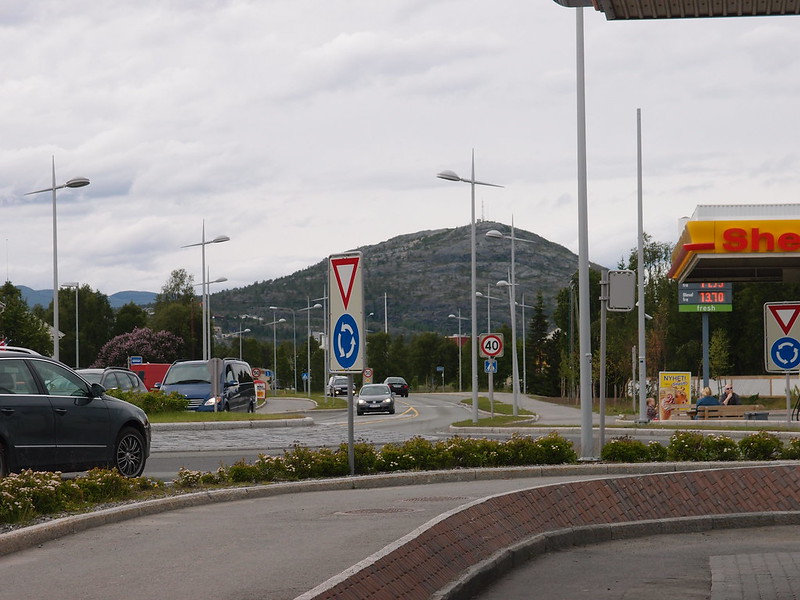
You won't always have a choice of gas station brands, but as long as you're in a largish town, Shell is your friend. Shell stations are almost exclusively manned (not automatic), they stock V-Power gas, and they have a good selection of consumables such as engine oil. All of this is important.
  • Automatic gas stations in Finland, especially Neste ones, will very frequently refuse to accept credit cards issued outside Finland. I'm not even sure they take cash, but if so, that's still not a good option: they don't take coins or give change, the smallest paper bill is 5 euros, and you will want to fill up the tank to the brim at every opportunity. You can usually choose a "pay at the cashier" option if there's a shop attached, and you can just tell the clerk that you want to fill up the tank - they can set the pump to give you whatever amount of gas you need and pay later.
    • If the pump gives you an option of paying by card right there, or paying at the cashier, choose the latter. You're losing a couple of cents on the liter, but cashiers will only charge the actual amount you bought to the card. Automatic terminals will reserve money on your card before they let you start pumping. This reservation will be released eventually, but it will take a few days. Some terminals ask you how much money you want to reserve; others don't. My main bank card looks like a credit card to terminals, but is actually tied to my account balance: any reservation temporarily decreases the money I have in the bank. A Finnish ABC station reserving 20 euros while I pump 16 euros' worth is not a big deal. A Norwegian Statoil blocking out almost 200 euros (when I canceled out of the first transaction by mistake and started again), not from a bank's credit line but from my actual balance, is a major inconvenience.

  • Most gas stations in Finland and Norway sell E5 or E10 gas. Regular 95-octane, which I use in my bike at home, comes in the form of E10 in Finland - ten percent ethanol. This is actually not very healthy for an engine that wasn't designed for it (though modern bikes with electronic fuel injection should cope fine in the short term), and it definitely increases the fuel consumption. 98-octane is usually E5, five percent ethanol, which is marketed as safe for any petrol engine. Shell V-power is 100% dinosaur juice. It's higher-octane, provides better engine performance, and while it's more expensive, it does lower your fuel consumption. Again, this is not a cost question - it is a range question.  Range is vital. Anything that improves your range is worth doing.
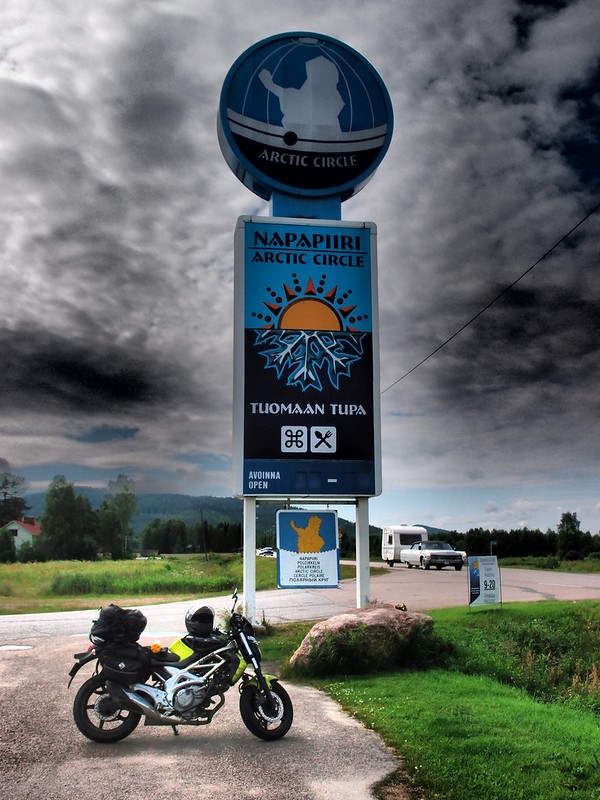
  • You are riding every day, long distances, at high speeds. It's quite likely that you'll burn some oil, even in a healthy engine. Shell stations have a good selection of automotive goods, including high-performance four-stroke motorcycle engine oil. I know because I bought a liter of it once, and then checked other Shell stations later out of curiosity. 
That said, there may be times when you have no choice, when the only fuel available to you is crappy 95-octane E10 from a suspicious rural gas station. That's part of the adventure. Make a mental note to stop at the next Shell station you see, and at least be thankful that the only fuel station within range was not a diesel-only Neste Truck!

The Details

My Gear

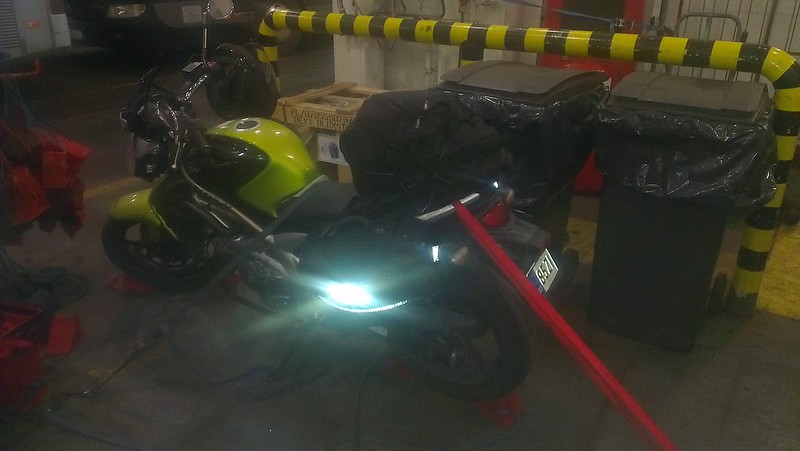
Bike: 2009 Suzuki SFV650 Gladius, Oxford Daytona heated grips, Renntec crash bars, Puig windscreen.
Armor: Modeka Yuma jacket, Modeka Quebec Pro trousers, Modeka Sahara Traveler gloves, Falco Mixto boots, HJC ZF-9 helmet.
Luggage: Mototravel soft sidebags, Adidas backpack attached with elastic cargo straps.
Sanity: HTC One X with Navigon offline navigation and about ten gigabytes of audiobooks, Zagg Sparq battery pack, HP Mini 5103 netbook for the camps.


My Route

Day 0:
Tartu-Tallinn (via Piibe mnt) - 200km or so.

Day 1:
Tallinn-Helsinki (Viking Line XPRS ferry) - 2,5 hours and 80km.
Helsinki-Lahti (freeway)
Lahti-Jyväskylä (routes 314/612/610 through the lakes)
Jyväskylä-Oulu (straight shot up route 4/E20)
Total riding: 660km


Day 2:
Oulu-Kemi-Tornio-Muonio - 350km or so.
It is possible to cross the river at Tornio and ride much of this stretch on the Swedish side, but I didn't.

Day 3:
Muonio-Enontekiö-Alta-Honningsvag - 500km or so.

Day 4:
Honningsvag-Nordkapp-Honningsvag-Lakselv-Karasjok-Kaamanen - 325km or so.

Day 5:
Kaamanen-Inari-Ivalo-Rovaniemi - 365km or so.

Day 6:
Rovaniemi-Kajaani - 335km or so.

Day 7:
Kajaani-Kuopio-Mikkeli-Lappeenranta - 440km or so.

Day 8:
Lappeenranta-Kouvola-Helsinki - 225km or so.
Helsinki-Tallinn - Tallink Star, 2 hours and 80km.

Day 9:
Tallinn-Tartu (via main road) - 190km or so.

My Costs

Average fuel economy: ~4.5 liters per 100 kilometers.
Average fuel cost in Estonia: 1.38 euros per liter.
Average fuel cost in Finland: 1.7 euros per liter.
Average fuel cost in Norway: >2 euros per liter.
Tallinn-Helsinki ferry, Viking Line XPRS: 41 euros
Helsinki-Tallinn ferry, Tallink Star: 48 euros
Accommodation: Oulu (AirBnB) - 35 euros, Muonio (Harriniva, cabin) - 20 euros, Honningsvag (Vandrerhjem hostel, single room) - 65 euros, Kaamanen (Neljän Tuulen Tupa, cabin) - 15 euros, Rovaniemi (Hostel Rudolf, single ensuite room) - 48 euros, Kajaani (Hotel Kajaani) - 65 euros, Lappeenranta (Guesthouse Kantolankulma) - 67 euros.
Nordkapp entry - 32 euros, although you can pay less if you don't want to see the movie.


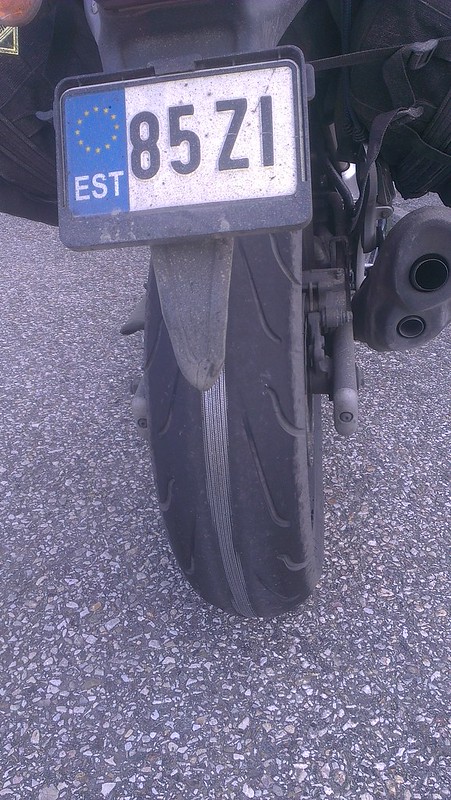
This does not include food, entertainment, or incidental costs down to my own stupidity, such as having to buy a new rear tire in Lakselv, middle of the frozen Norwegian outback, for 2500 NOK - 344 euros, at least 200 euros more than the same 170/60R16 Michelin RoadSport2 would have cost back home.

As always with unconventional travel: expect it to cost a lot more than you envisioned, and have a budget reserve to get you out of tight spots. Finland and Norway are expensive places, but the people of the North don't abandon travelers.

Thursday, July 12, 2012

Of Banks, Thanks and Tanks

Further to this:

There is an ever-louder discussion of why exactly Estonia should help bail out the Southern Eurozone countries. Here's a link to an interview with our Finance Minister (in Estonian). Although the current cabinet is full of people who often speak more directly and more insultingly than most European politicians, and Ligi is one of those people, I think there is room for an independent voice to provide more clarity still.

We're part of the bailout because Germany wants us there, and why Germany is willing to bail out those countries is actually irrelevant to Estonia's own internal political discussion. Estonia has benefited very heavily from European solidarity in financial terms. Being on the other side of that solidarity now, helping out others instead of just receiving help, not only repays some of the moral debt we owe to Europe, but accrues moral credit. We're pulling our weight, even though it's a difficult thing for us to do, and we have good short-term reasons not to do it. It makes the rest of the continent see us as an integral part of Europe. It is a favor we're doing, and the fact that we're not doing it for our own obvious gain is what allows us to expect a favor from Europe at some indeterminate point in the future. And that's where it comes down to the unspoken but well-understood, and well-founded, paranoia that underlies Estonia's political discourse, the ultimate purpose that the failing, dysfunctional, spent generation of Estonian statespeople still understands far better than the millennial generation which takes Europe for granted.

A strong bond with a weak Europe is still Estonia's best geopolitical choice.

Today, Estonian money protects Spain's banks; so that tomorrow, Spain's tanks would protect Estonia's borders.

Saturday, February 04, 2012

ACTA Is Not Evil; It Should Be Rejected Anyway - Part II

In Part I, I described why ACTA is not the intrinsically evil entity that people think it is. In fact, it is a relatively boring and toothless trade agreement that does not place any additional burdens on countries beyond what most signatories already have in their own national legislations.

So, am I going to go and withdraw my signature from the petition to stop ACTA, and tell my MEPs that they are free to vote for it if they can trade that favor for, let’s say, better agricultural subsidy terms for Estonian farmers?
I won’t. While ACTA’s text is nowhere near scary enough to warrant the level of public opposition it has received, the existence of that opposition is in itself a reason to reject the treaty.

As I have said before, if the majority of a democratic society expresses its desire sufficiently unambiguously, then that desire must be implemented, even if it is counter to the prevailing ideology. Governments and legislation exist only because it is not feasible to seek a referendum on each policy decision. At this stage, it would actually be technologically possible, but the general population does not have the time to thoughtfully consider the implications of a matter and arrive at an informed opinion. This is replaced by politicians running on broad platforms, and the people choose the broad direction they feel most comfortable with, then delegate their decision power. But the decision power stems from the people, and if the people actually care about an issue strongly enough, then that overrides the opinions of politicians, and the existing laws of the land.

ACTA is a touchstone issue. The anti-ACTA protests are not the result of the text of ACTA itself, or its implications; they are the result of an attempt to impose outdated behavioral models on an evolved technological world. And while a small layer of specialists may be genuinely worried about things like region-free DVDs or burdens on service providers, the majority of the human force of protesters is worried about something else. Everyone who saw the Wikipedia blackout and called their senator – for them, SOPA/PIPA/ACTA was only the last straw. Their patience was worn down, and their anger slowly built up, by the fight between rights holders and filesharers.

The Internet allows digital content – music, video, text, software – to be copied near-infinitely, at very little incremental cost. This creates a conflict. Consumers would like all content to be available for free. Rights holders would like to receive full retail payment for each created copy. Over the last decade or so, a dynamic balance has been reached. Businesses generally do not use pirated software, and this is heavily enforced. Consumers will prefer to use legitimate software and acquire legitimate content, where it has been made convenient for them, and where the price reflects the fact that the incremental cost of creating and delivering a copy has fallen dramatically since the days of cassette tapes. They do this partially on moral grounds, and partially because they recognize the importance of supporting the content creator. But consumers remain very aware of two things.

1)      The content creator and the rights holder are often different entities. Consumers part with their money far more easily when it goes directly to the content creator (who then covers the expenses of production and delivery out of their revenue, and keeps the profit) than when it goes to a rights holder, who distributes that revenue in opaque ways. Even if the content creator makes a lot of money, people still resent the middleman. There is no sympathy for rights holders.

2)     People are aware that the filesharing alternative exists. Where cumbersome artificial copy-protection measures makelife difficult for legitimate customers, and prices are perceived as being too high, they will turn to torrenting.

The origin of SOPA/PIPA, and the perceived threat of ACTA, is that the rights holders are attempting to legislate away the advances of digital technology, and the de-facto capabilities of consumers. This is why the public opposes ACTA. And the public’s voice must be heard. In a democratic state, if the will of the people is as clear as it has been made with ACTA, governments must submit to it, even if it is contrary to the interests of the rights holders.

If the public feels that intellectual property should not be protected or enforced in the way envisioned by ACTA, that's just too bad for the rights holders. The public must then deal with the possibility that content will no longer be created if rights cannot be enforced. Implications must not be hidden from the people, and their impact must not be softened. But the will of the people must be paramount.

Digital rights enforcement is broken, and is actively counter to both the will of the people and the technological reality. That is what the web demos are protesting, really. Yes, ACTA was the catalyst because its communication was grossly mishandled, but it does come down to the issue that modern technology allows for free content distribution, and the rights holders have mostly chosen to ignore the change in technology and attempt to enforce outdated business models through legislative means.

It's the same as the War on Drugs in that sense; if everyone is smoking weed, it's stupid to put people in jail for carrying a joint. If everyone is downloading, it's stupid to put people in jail for downloading.

One of the most preposterous things is that the issue has been successfully resolved for a different medium (analog-media copying) and works today. There was a hidden tax on every blank cassette tape and VHS tape sold, and that money was divided amongst rights holders. Even before that, there was the radio fee distribution scheme – radio stations pay to broadcast music, as do public venues that play music through their in-house audio systems. The equivalent solution – long since proposed and already adopted by some EEC members and other countries – is to place a flat levy on Web access, as payment for the implied piracy. This produces far less revenue for rights holders than they would like, but it resolves the moral issue while protecting the rights of consumers.

There are compromises to be made in the fight against piracy. As for ACTA, it is an issue of democracy. Because the people have chosen to reject it, and made their opinions heard, the politicians must reject it as well.

My signature is still on the petition.

Thursday, February 02, 2012

ACTA Is Not Evil; It Should Be Rejected Anyway - Part One


There has been plenty of noise on the Internet about ACTA, the treaty that includes provisions on regulating copyright infringement on the Internet. There is a lot of criticism, but most of it is emotional and confusing. A fellow Euroblogger, looking for clarification on the meaning of ACTA, contacted me and asked if I had actually read the full text.

I hadn’t. So I did.

A few disclaimers to begin: I Am Not A Lawyer. I am, however, interested in European affairs and technology politics; I have been asked to comment on politics before, by press and official organizations; and by occupation I am a technical writer and translator. Some people pay me to read complicated legal texts, understand what they mean, and recreate that meaning very accurately in a different language. Other people pay me to take complicated ideas and concepts, and explain them in simple, understandable ways. They keep paying me, so I guess I’m good at it. (If any lawyers are reading this and have substantial objections to my analysis, I'd love to talk to you in the comments!)


The text of ACTA that I am using is this one: http://www.dfat.gov.au/trade/acta/Final-ACTA-text-following-legal-verification.pdf. There are many versions and drafts of ACTA around. That one appears to be the final one that’s being signed. I will quote relevant bits of text, but in any case I encourage you to go and read the source. By the standards of international treaties, ACTA is very understandable and unambiguous.

Most of ACTA’s text is actually about counterfeit trademark goods – things like knock-off designer handbags and fake name-brand sneakers. I will disregard all of that, and just focus on things that have to do with the Internet. (None of the stuff about knock-off handbags and sneakers is objectionable, it’s all about seizing shipments and border controls.)

Got that? OK.

First, the good news:

ACTA does not supersede national legislation. It is an international treaty under the umbrella of the World Trade Organization. It is not a law of the land in the same way that SOPA/PIPA was in America. It has very specific language to this effect, in Article 3: “This Agreement shall be without prejudice to provisions in a Party’s law governing the availability, acquisition, scope, and maintenance of intellectual property rights. […] This Agreement does not create any obligation on a Party to apply measures where a right in intellectual property is not protected under its laws and regulations. […] In implementing the provisions of this Chapter, each Party shall take into account the need for proportionality between the seriousness of the infringement, the interests of third parties, and the applicable measures, remedies and penalties.” In the text of ACTA, some paragraphs say “shall” and some say “may”. For the latter, the country gets to decide if those will be implemented in its own legislation. Each country is explicitly permitted to have exceptions in its own legislation, choosing not to make certain activities illegal. This is part of the opening paragraphs, the context for everything that follows. Also pay attention to the principle of proportionality. In America, where massive civil lawsuits result in disproportionate financial settlements, the principle of proportionality does not seem to be widely upheld. In Europe – and particularly in Estonia, where many have complained about overly lenient prison sentences for crimes such as rape and murder – a specific reference to proportionality is very soothing to individual Internet users.

ACTA does not turn individual pirates into criminals. Even if it is accepted as written and the country does not claim an exception under its own laws. There are two relevant sections here: Chapter II, Section 2 “Civil Enforcement” and Section 4 “Criminal Enforcement”. Under the latter, Article 23 says: “Each Party shall provide for criminal procedures and penalties to be applied at least in cases of wilful trademark counterfeiting or copyright or related rights piracy on a commercial scale. For the purposes of this Section, acts carried out on a commercial scale include at least those carried out as commercial activities for direct or indirect economic or commercial advantage.” ACTA requires each country to criminalize companies such as Megaupload (which was making a profit directly out of copyright infringement) and the sort of counterfeit software shops that Estonia used to have in the late 90s-early 2000s, where people were actually selling CDs and DVDs of software – making money out of it. As written, ACTA’s criminal enforcement articles would not even apply to The Pirate Bay, which does not make money from copyright infringement (it takes donations and sells merchandise with its own logo, demonstrably only making enough money to cover its operational expenses – a non-profit organization, not operating on a commercial scale). These provisions certainly do not apply to individual downloaders, for whom no money ever changes hands while they torrent.

ACTA does not place unreasonable burdens on service providers. The American version, SOPA/PIPA, scared the likes of Google and Wikipedia because it would have made it possible for rights holders to force-close websites for something as small as a visitor posting a link to unlicensed media in a comment box, and because it would have forced ISPs – the companies that provide Internet connections to homes and offices – to actively hide websites, effectively censoring content. All of this would be done without any involvement by courts, and without any ability to challenge the rights holders’ claims. But in ACTA, there is specific language to prevent this. In Article 6: “These procedures shall be applied in such a manner as to avoid the creation of barriers to legitimate trade and to provide for safeguards against their abuse.” And in Article 27: “These procedures shall be implemented in a manner that avoids the creation of barriers to legitimate activity, including electronic commerce, and, consistent with that Party’s law, preserves fundamental principles such as freedom of expression, fair process, and privacy.” Again, ACTA leaves a lot of room for countries to individually decide what constitutes a barrier, an abuse and a fair process.

ACTA does not introduce limits that are not already in Estonian legislation, nor in any Western country’s legislation, I suspect. The Estonian government already released a statement saying nothing in Estonian law or practice would have to change because of ACTA. The test case for this is Estonia’s filesharing loophole: it is technically illegal (though rarely prosecuted) to upload unlicensed content, but if you’re only downloading a copy and not allowing anyone else to copy it off you, then you’re fine. From ACTA’s most draconian part, Article 27 paragraph 7b: “to distribute, import for distribution, broadcast, communicate, or make available to the public copies of works, performances, or phonograms, knowing that electronic rights management information has been removed or altered without authority.” You will note that it says distribute, but not acquire. The loophole stands.

Now for the bad news. There are two parts of ACTA that can justifiably make the Internet public nervous.

The first is Article 27, which requires countries to have legislation against copyright offenses on the Internet. However, this is about circumvention – actively removing copy-protection from works, and does not cover using works with it already removed for personal purposes. (You can’t crack a game, but you can download and play a cracked one, if you set your torrent client’s upload speed limit to zero.) It is also about making circumvention measures available – but not using them. (Building a keygen or a cracked EXE file for a game is illegal; downloading that EXE and using it on your own computer is not.) This is where you have to do some soul-searching. Will the Internet really be destroyed if the people who create copy-protection workarounds are declared criminals? Remember that a) they already have been under most national legislations and ACTA does not introduce any new measures to find them, b) they are few and far between, and c) as a group they have stayed anonymous very effectively until now, and will probably stay anonymous if ACTA passes.

Article 27 also makes distributing that content illegal. You are liable for uploading content, including participating in BitTorrent file-sharing the way it is meant to work – not just receiving data, but sending it to others as well. But remember that this is merely illegal, not criminal; and that ACTA leaves room for countries to decide just how much they care about stopping you from doing it.

The other disturbing part of ACTA is in Chapter II, Section 2 “Civil Enforcement”, Article 9. Without quoting the full text (go and read it!), this introduces the rights holders’ favorite idea: that civil damages from copyright infringement should be measured in the retail cost of a single copy of the content, multiplied by the number of copies made. Or, for a single filesharer, the sum of the retail prices of all songs, movies, games etc. found on their computers. This obviously is to the benefit of the rights holders, letting them demand more money. It is also completely, self-evidently idiotic to anyone who has studied even the simplest, most basic level of economics, the elasticity of demand. Actually, it’s intuitively idiotic to anyone who has ever made a purchasing decision when they wanted two things and only had enough money for one.

When a type of product is available for free, and is easy to get, then people will get any item that seems even the least bit interesting. Digital content that you will end up not liking doesn’t even take up room in your closet, so there isn’t even an opportunity cost to stop you from getting it. And since downloading a file doesn’t mean someone else is deprived of the ability to use that file – perfect copies are created without damaging the original – there is no low-level moral argument against downloading, like there is against stealing an apple from a tree in your neighbor’s garden. But if you have to give up some of your money in exchange for digital content, then you will simply get a lot less of that content, because your money is limited, and there are a lot of things which you would like to have more than music or movies that aren’t very interesting to you.

The revenue that rights holders lose to digital piracy is not equivalent to the sum retail price of all existing pirated copies. They would never have sold that many copies. To claim otherwise is disingenuous on the part of the rights holders, and this is the main reason why normal people – not zealots who believe all information must necessarily be free – have no sympathy for the rights holders.

And normal people are the ones who matter. That is why ACTA – which is not evil, nowhere near as destructive as SOPA/PIPA, and in fact a boring trade agreement that does not change anything significant in any participating country’s legislation – must be rejected.

But this article is long enough already, so you’ll have to wait for Part II to read what I mean by that. (Sorry, Jacques, I know it was the second part you really wanted me to write today, but I got carried away!)

Friday, January 20, 2012

MEP vs ACTA


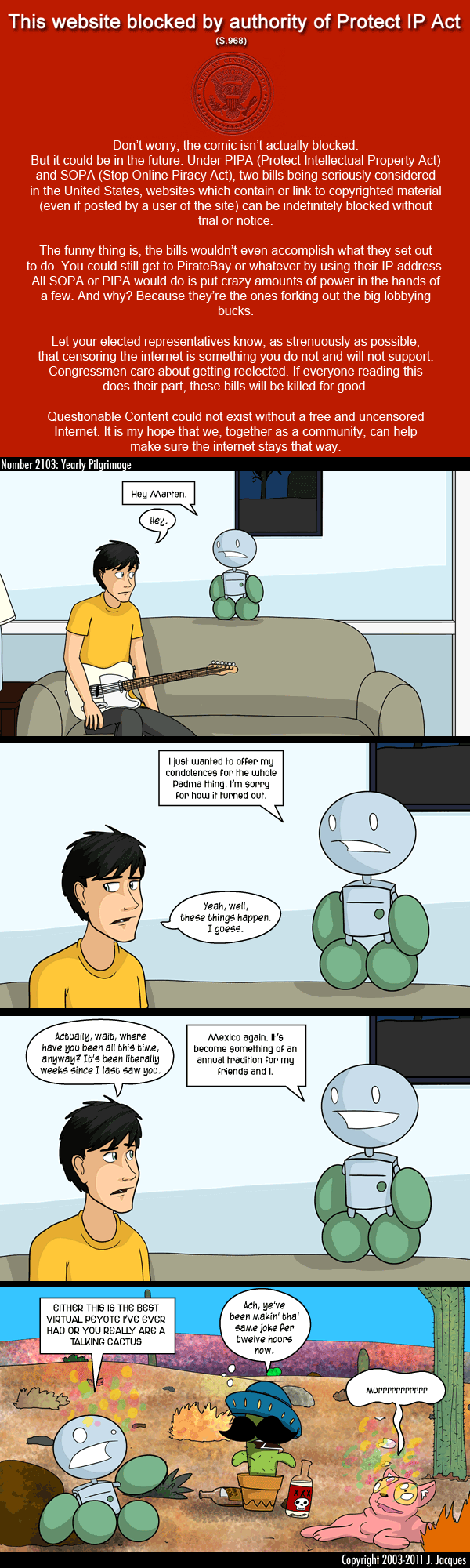
This Wednesday, Wikipedia and a bunch of other websites blacked out their content in protest to SOPA, a bill in the US Congress that would break the internet while not actually being effective at fighting piracy.

There is a version of this legislation that is immediately relevant to Europeans. It's called ACTA, and it's an international treaty that needs to be ratified by the Europarliament and individual EU member states before it goes into effect. The first step was approval by the European Commission, and that was done in a very underhanded and secretive way, to prevent the public from learning about it. Didn't work.

On the day of the SOPA blackout, I decided to be slightly more proactive, and do a little personal test of democracy. I went on Facebook and looked for the accounts of Estonia's Members of the European Parliament. Four of the six had accounts.* I sent a private message to three of them and posted on the wall of the fourth. (Facebook will only let you post on the wall of someone who already confirmed you as a friend, but you can message anyone directly. I happened to be Facebook-friends with Indrek Tarand already.) My question was simple: how do you intend to vote on ACTA?

That was two days ago, and impressively, two people have replied already. Ivari Padar said that he was not part of the committee that dealt directly with ACTA, but referred me to his parliamentary faction's position paper on it. It's a boring political answer and the paper doesn't actually say whether the Socialists & Democrats faction is for or against the treaty, but at least they're asking questions - and Padar scores points for promptly responding to a voter's inquiry.

The other response was from Tarand, who pointed me to his website. He'd published an opinion on ACTA as long ago as 2010, and while this is also a political text, it does make clear that Tarand's attitude to ACTA in its current form is negative. Hopefully he will vote against it if and when it comes up in the Europarliament's agenda.

Contact your MEPs and make sure the rest of them do as well.


---
*Tunne Kelam does have an account, actually, but I didn't find it at first - and it looks inactive (probably registered for him by a staffer to prevent squatting). Vilja Savisaar-Toomast has not replied yet, and neither has Kristiina Ojuland. Siiri Oviir does not have a personal account.

---
PS: This is the 600th post on antyx.net. Awesome.

Tuesday, August 23, 2011

You're Praising Us Wrong

Over the last decade or so, Estonia has frequently been the subject of praise from foreign commentators for its rapid growth and fiscal responsibility. This has increased since the start of the global financial crisis in 2008 - we were hit pretty bad in the property bust, but have recovered well. (I've compared data from March 2007 to March 2011, and the average wage has increased 20%, while the Consumer Price Index has increased 21%.) We're also competing with Luxembourg for the lowest public debt in the Union. All this looks like a really good situation to outside observers obsessed with debt and growth problems in the US and EU, so there have been a number of articles talking about how we've been Doing It Right.

I want to talk about what our fans are doing wrong. I want to talk about bits of the Estonian state which are not mentioned by commentators who are using us an example for their own ideology.

On the US side, the most obvious example of this I've seen recently is this article in something called the Washington Times, by a man called Richard Rahn, "a senior fellow at the Cato Institute and chairman of the Institute for Global Economic Growth" - in other words, someone who lives in the US capital and talks for a living.
Estonia serves as an example - even for the United States - of what can be accomplished by keeping down deficits and debt, and utilizing a flat tax rather than a progressive income tax.
That is true enough. But to any member of the US right wing (which is quite different, ideologically, from the European and even Estonian right wings), I would recommend they remember this:

1) That flat tax really is flat, as in, it doesn't decrease for the top earners. It also makes no difference between wages, capital gains, stock options, or anything else. Captains of industry may manage to siphon cash into Swiss bank accounts, but all personal earnings are taxed at the same rate. In fact, because income tax is waived for the first little bit of money you earn, the effective rate actually grows the higher your income gets, although this is insignificant above average-wage level. The free-market beacon you offer up to the wayward US does not give tax breaks to the rich.

2) Universal healthcare for everyone. People can be unhappy with the quality of treatment, and occasionally rightly so, but it's almost impossible to end up without healthcare coverage. If you or your spouse are on someone's payroll (even at minimum wage), if you're a minor, if you're a college student, if you're registered as unemployed - you get health insurance. No tiers. You can pay to jump a queue, but you still see the same specialist who's working with the same equipment, and it's paid for by the state.

3) Free higher education. Not universal - because no economy needs too many college graduates - but the state sponsors enough spots that if you know what you want to do after school and have the talent for it, you won't have to pay tuition. Between special subsidized student loans and a tradition of part-time work in college, smart and capable kids from low-income families have no problem getting a high-quality education. Access to the entire EU's worth of universities certainly helps.

The arguments are somewhat different when talking about the praise heaped on Estonia from EU-centric sources; here's a representative article from The Economist. Europe's right-wingers point to Estonia as a paragon of austerity, but are quick to ascribe it to cleverness and low levels of bureaucracy. But the key quality here is patience and a willingness to suffer for ultimate long-term good. That latter is what's missing in Europe as a whole today. Lack of it is the cause of the European sovereign crisis. Its onset is the only way to resolve the issue.

Quite simply, Estonia does not spend more than it earns - and neither should other countries. The Eurozone crisis is about unsustainable government-sector borrowing. Sure, a lot of Estonia's post-independence development has been subsidized by EU structural funds - but the same goes for a lot of other EU states, old and new. The threat to the common currency, the threat of Greece or Spain or Italy or Portugal defaulting, is that afterwards, Eurozone states will no longer be able to borrow money at low rates. So stop borrowing.

Forget PIGS. Both Germany and France have government debt of over 80% of their GDP - the entire value produced in those countries in a year. The Eurozone average is 85%. All the countries in the EU except Estonia and and Sweden spent more in 2010 than they earned, so that debt is only getting bigger. The initial thinking was that deficit spending would be canceled out by growth; by the time a country had to repay the debts, it would be collecting so much more in taxes that repayment wouldn't be difficult, or at the very least there would be a net gain. But most European states are at the point now where it is extremely unlikely that they would ever be able to pay off their public debt, and they haven't even started. Greece and Ireland and the other Eurozone states who have been particularly reckless with their spending are the first to reach the point where nobody trust them to keep up payments any more - but every single country in the EU will get there within the foreseeable future.

Unless they stop deficit spending.

This will be very difficult for politicians to sell to their voters, because today's Europeans see prosperity as their birthright. But balanced, surplus budgets are the only way to deal with the crisis.

The EU's government debt issue is not as bad as America or Japan's, true. But America has a lot of fat to trim. There are vast reserves of inefficiency in its budget-sponsored industries, primarily military and healthcare. Sooner or later, push will come to shove, they will introduce a single-payer system that will cut healthcare costs by a massive margin, and stop shoveling quite so much money into their military-related industries. They will also raise taxes on the top earners, like they did to pay off their WWII debt. They had a surplus in the 90s. The reason they don't now is because of their politicians.

The reason the EU doesn't have a budget surplus is because of its voters. The politicians, I'm sure, are well aware that austerity is necessary - but the populations will not stand for it. The EU already has high taxes. Increasing them further may help, but EU taxpayers expect to get something back for their contribution, a higher level of services, higher government spending. And it's government spending that needs to be cut.

In 2010, Germany's government debt increased by 3.3% of GDP. France's increased by 7% of GDP. Ireland's government spent a third more in 2010 than the value of everything that every person and corporation in that country did or created, put together.

The only realistic way to repay Europe's debts is to cut spending. Some will find it easier than others. None will find it as easy as Estonia did.

Sunday, January 02, 2011

Yay, I'm a Pundit! and other €-linkery

Courtesy of Kris Rikken, I've been quoted in the British press. Beyond that, the Economist's Charlemagne has a pretty good write-up of the motivations and implications of Estonia's Euro accession. For those who might not have read it before, here's my distilled Euro analysis. The first-day coverage of the switch in the Estonian press has been humorous to track, though not particularly interesting to read: half a dozen full-page articles about everything pretty much running smoothly and nothing going wrong.

Oh, and Happy N€w Y€ar!

Thursday, December 09, 2010

Wait, What?

The most locally relevant thing in the Wikileaks infodump so far has been the business surrounding the NATO defense plan. Now, nothing actually secret has come out of the cables, as far as I can see - we knew back in Spring that a Baltic defense plan existed, and even that nine divisions were earmarked for it. The particular Polish and North German ports that would act as naval bases were not mentioned, but I expect anyone who's researched NATO naval capabilities and the state of the Baltic coast would find the choices either self-evident or at least expected.

Like with most Wikileaks material, the important part is not the information itself - which was either publically known, heavily suspected, or ought to have been inferred by the intelligence analysts of what used to be called the Likely Antagonist. The important part is that the implied factors have now been confirmed. Theories about how the other side might react now have a very convincing basis.

And when politicians are forced to stop bullshitting, everyone else gets a moment of clarity as well. A moment of true intentions becoming apparent.

Cue the statement of Russia's envoy to NATO, one Dmitry Rogozin - a loudmouth of some standing, admittedly, but someone who is acting in an official capacity as a representative of the Russian government:

"We must get some assurances that such plans will be dropped, and that Russia is not an enemy for NATO," he said. "I expect my colleagues from the NATO-Russia Council to confirm that Lisbon has made all the difference."

Rogozin said that despite official denials by NATO officials, the plan was clearly aimed at his country. "Against whom else could such a defense be intended? Against Sweden, Finland, Greenland, Iceland, against polar bears, or against the Russian bear?" he said.

Let that sink in for a moment. Russia, attempying to normalize its relations with NATO and no longer be seen as NATO's possible enemy, insists that NATO stop intending to defend its member states. Rogozin would like NATO to make a policy that it will allow Russia to invade NATO states and will not respond to it.

Under no reasonably conceivable circumstances is the Baltic defense plan a threat to Russia's current territorial integrity. Never mind that NATO has no interests in Russia - if you were an end-of-days conspiracy freak, you could come up with a scenario of NATO swooping in to secure natural gas supplies for Western Europe, but that gas comes from Central Asia and having control over the Nord Stream beach head is not enough to guarantee uninterrupted delivery - but in any case, nine divisions plus the local strength is not enough to mount any sort of credible invasion of Russia.

The Baltic defense plan in its leaked form could not possibly constitute any kind of threat to Russia's territory. The only reason Russia would object to it so strongly - more strongly than China today objects to US forces stationed in Taiwan - is if the defense plan were a threat to Russia's ambitions.

Take some time to think about the implication of Russia getting seriously upset about a legitimate Western commitment to protect the Baltics and Poland against invasion. For my money, this signals that Russia has still not come to terms with the Baltics falling outside of its sphere of influence, and if at this point it is unwilling or incapable to get control of the territory by military means, it has most certainly not discarded the option in its mid- to long-term intentions.

As I never get tired of saying: Yes, we're paranoid about Russia. Yes, they're actually after us.

---

Bonus 1: Giustino weighs in.

Bonus 2: With my Tom Clancy rubber face mask on, I've actually come up with a scenario where NATO troops in the Baltics are a threat to Russia's territorial integrity. It involves a massive uprising of Ingrians - ethnic Finno-Ugrians living at the butt of the Gulf of Finland, the native population that was there before Saint Petersburg was built. How many genuine ethnic Ingrians are left is a matter of some speculation, but there is certainly a group of people who self-identify as Ingrians, and juxtapose that identity to the Russian state. Most of them make the effort to obtain Estonian or Finnish citizenship, and the movement does profess the theoretical desire of establishing an Ingrian state that would follow in the footsteps of Finland and Estonia, resolutely Western-minded. From what I've seen, the driving force behind it is hatred of the Russian central authorities, more than any genuine desire for cultural self-determination, and in the event of a massive institutional collapse in the Russian Federation the Ingrian banner may just be taken up by people whose primary intention is to reject the rule of Moscow kleptocrats.  

If so, a significant NATO deployment just across the Narva river may be tempted to move in, under the guises of a peacekeeping mission. Hell, even material support and a base of operations would be sufficiently dangerous, if the Ingrian cause is used as a pretense by a sufficiently large rebel force. Remember your history. About a century ago, the Judenich corps, remnants of the Russian Imperial army, laid siege to Petersburg and came uncomfortably close to capturing it. Judenich was ultimately defeated by the brilliant military leadership of Leo Trotsky, but a big part of that was the withdrawal of support (and eventual outright betrayal) by Estonian command. This was the tail end of the Liberation War, when the Gulf was controlled by a British naval expeditionary force and Estonia had just defeated the German Landeswehr, liberated Latvia and fought the Bolsheviks to a stalemate on its eastern border. The Estonian leadership had no intention of prolonging the war with whoever controlled Russia, its purpose was independence and territorial security, not conquest; but if the Estonian army, battle-hardened and armed with Entente weapons, had actually backed Judenich and attacked Petersburg, Trotsky's militia could very well have failed.

Rogozin and his ilk might be seeing Ingria as a potential Kosovo - or potential South Ossetia, pick your poison. I don't believe NATO would rush to intervene in an Ingrian uprising, for pretty much the same reason that Estonia did not get involved in Judenich's campaign. But since we're talking about implications, here's one: if the Russian state leadership thinks that a credible NATO presence at the Baltic border could actually make a difference, then perhaps the Russian state is closer to the brink of failure than we think.

Thursday, July 22, 2010

Post 555

From the euroblog circuit: EU arbiter upholds the decision of a Dutch court to prevent coffee shops from selling to foreigners. (I'd like to see them try to enforce it, by the way, and then see what happens to tourist revenue.) My response: I understand why, to overturn the decision would effectively open up the Common Market for free trade in cannabis, but in a general legislative sense it's still Wrong(tm). In fact, it's legally tantamount to Denmark preventing its newspapers from publishing Muhammed cartoons drawn by exiled Iranians.

Because in both cases, it's being done to prevent visitors to your country from being stoned to death.

(Badum-tscht. Look, it was either this, or put that joke in my standup routine, and those people are actually paying for a ticket.)

Disclaimer: My personal position on weed is that as long as alcohol and tobacco are legal, banning soft drugs is just disingenuous; and empirically, people get into far less trouble on weed than they do on Jägermeister.

Friday, June 25, 2010

Euro, Ad Nauseum

Giovanni Angioni of the Estonian Free Press contacted me to request a comment. The text below is a response to that. Some of these points are recycled from previous articles on AnTyx and elsewhere.

1)      Estonia needs to enter the Eurozone for political reasons, not economic ones.

The country has maintained a peg to the Euro and the preceding Deutschmark at the same level for 18 years. Thanks to the currency board system, every cash kroon ever issued is covered by liquid assets. The peg is not volatile, it does not rely on market confidence, and it cannot be abandoned in a sudden sweeping move for legislative reasons. (I have seen a scenario for overnight devaluation without making the move public in the Riigikogu, but this relied on a very iffy loophole and would have almost certainly fallen to a constitutional challenge.)

In that sense, there is indeed no rush to join the Euro. Economically, Estonia could continue with the kroon, maintaining the peg, and would suffer very little penalties.

There are two main political reasons why Estonia is joining the Eurozone now. One is down to the government, the other is down to the people.

The government needs the Euro to justify its austerity measures. A balanced budget and a tiny public debt (indeed, still lower than the country’s reserve assets) have been a core value of Estonia since independence, but in a crisis this big, there is a natural desire to spend one’s way out of a hole: borrow money to support people who have fallen on hard times. Inevitably, this is what the opposition has been advocating. Instead the government has chosen to stay its course, slashing jobs and salaries in the public sector and raising taxes. In order to not get crucified, the governing coalition (which actually holds a narrow minority in the parliament and needs to negotiate with small parties to pass legislation) has explained away the need for these measures by the relatively clear numbers of the Maastricht criteria. The recession, high unemployment and lack of consumer confidence have put enough pressure on prices that inflation was actually negative in 2009; the last barrier to entry was the 3% budget deficit limit. Remarkably, the milestone was achieved with a comfortable margin (at only 1.7%).

The people of Estonia want the Euro because it is a mark of deeper integration. This is almost never spoken of aloud, but Estonia’s foreign policy is just about entirely driven by the desire to prevent another Russian occupation. Estonia is now a member of NATO and the EU, but that is not enough for Estonians to trust their allies. The country seeks a deeper integration – deep enough that European politicians will not be able to afford to surrender it in a chess game of interests with Russia. The Euro is a hallmark of that level of integration. Foreign readers may find it astounding, but remember that this is not a thing often said out loud. It is a nagging worry that lingers at the periphery of the Estonian psyche. Remember also that the war in Georgia two years ago reinforced this belief. We are, without question, paranoid. That doesn’t mean they’re not after us.

2)    Even if the Euro fails, it will not be disastrous for Estonia.

The best thing that could happen to Estonia, economically, is a massive crash of the Euro on January 2nd. The structural problems of the Eurozone as a whole do not scale down to Estonia, a tiny country with lower wage levels and living standards. If the Euro is devalued and the Eurozone itself holds, it will be an isolated market of 330 million consumers, who cannot afford imported goods, and desperately need to find cheaper labor domestically. Industrial investment will flow into Estonia, and its production capacity will skyrocket (in relative terms), as we steal back the jobs that went to China. This will stimulate a convergence of Estonian living standards with French and German ones far quicker than EU structural funds ever could.

If the Euro crashes and the Eurozone is disbanded, we simply go back to the kroon, re-pegging it against the Neue Deutschmark. The sum total of our losses is the collateral we’ve deposited at the European Central Bank, and the cost of re-printing the banknotes. This is a calculated risk that we just have to accept. The good news is that the forces that actually decide if the Eurozone persists, and control the resources needed to hold it together, have far more to lose in its disappearance than we do.

3)    Estonia cannot do anything truly useful with monetary sovereignty, anyway.

The ability to devalue at a snap is great for a large, self-sufficient economy. If Estonia is cut off from foreign markets, it can just about grow enough food for 1.3 million residents, maybe. Our value-adding manufacturing industry is actually bigger than most people imagine, but even stimulated by a cheap kroon, it will not be enough of an economic powerhouse. Exchange-rate penalties would price imports out of the consumer’s reach, and our real living standards would drop down to the level of the mid-90s, which is orders of magnitude worse than this recession has produced to date.

Beyond that, there is a tremendous amount of households that struggle with a mortgage denominated in Euros. Devaluation would trigger a wave of defaults that would devastate the Swedish banks that issued them, and leave Estonians without property. (The same goes for businesses which have taken out loans to expand and re-tool.) The embarrassment caused by that alone would negate any influx of investment capital interested in the decreased labor costs.

Meanwhile, Estonia’s most valuable assets – highly skilled professionals – either already have contracts that list their prices in Euros, or are mobile enough to simply pick up and move to where their talents will be better compensated. Decreased labor costs and the associated increase in competitiveness will either not apply to high-tech sectors at all, or the effect will be very minor.

We cannot abandon the Euro peg with any real benefit. Switching to the Euro on the eve of its crash will bring some short-term trouble, but far bigger long-term benefits. Continuing with a pegged kroon while the Eurozone is repaired will deny us some relatively minor, but potentially useful benefits.

Objectively, there is no reason not to join.


AddThis

| More